Landscape from Skagen — History & Facts
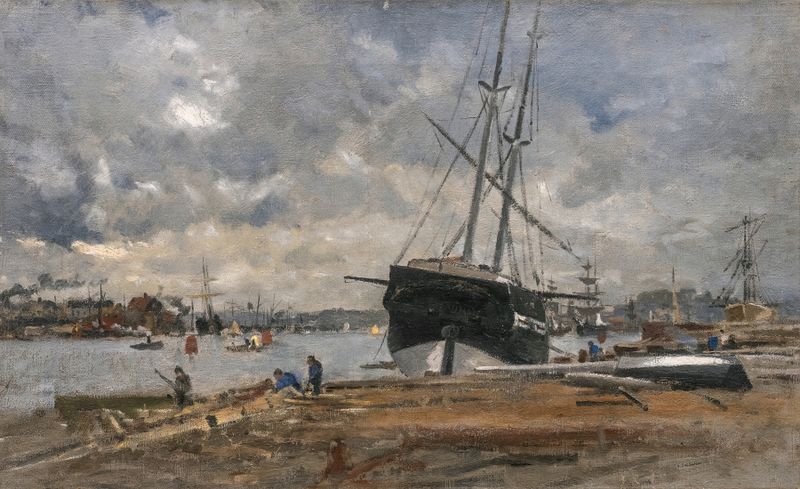
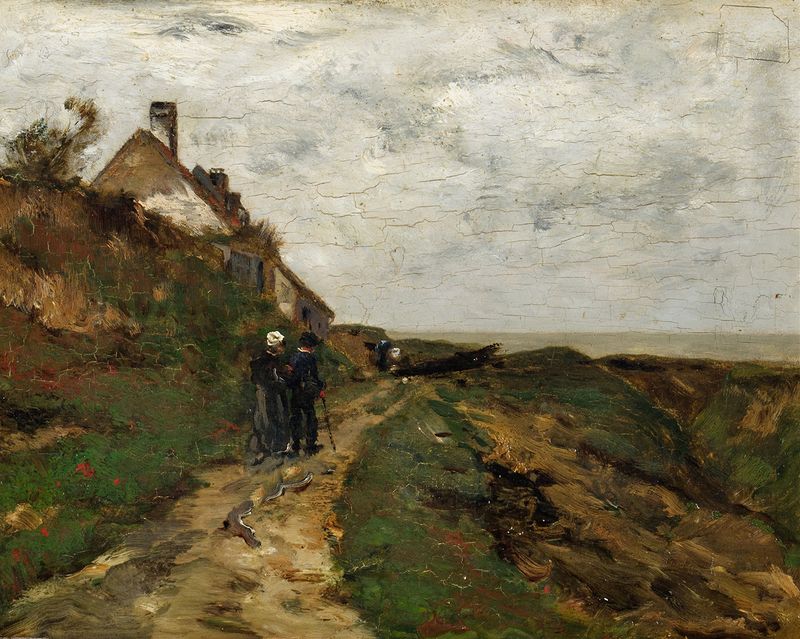
What secret hides in the quiet of the canvas? Beneath the serene surface of Landscape from Skagen, a tension pulsing with the echoes of violence and tumult awaits discovery. Look to the foreground, where the delicate brushstrokes render the soft dunes of Skagen, inviting your gaze to wander across the landscape. Notice how the cool hues of blue and green breathe life into the scene, contrasting with the warm golden tones illuminating the sandy paths that lead toward the horizon. The sky, painted with wisps of white clouds, seems to murmur of tempests past, while the subtle layering suggests movement, an unease lurking beneath the placid surface. The juxtaposition of tranquility and chaos reveals deeper emotions.
The stillness of the landscape entraps the viewer, yet the restless sky implies an unseen storm brewing, hinting at the violence of nature just beyond the frame. Moreover, the well-defined edges of the dunes stand as silent witnesses to the passage of time, harboring stories of transformation, erosion, and the quiet destruction inherent in beauty. In 1878, Wilhelm von Gegerfelt painted this piece during a transformative moment in art history, amidst the burgeoning Impressionist movement. Living in Skagen, Denmark, he was influenced by fellow artists who were attracted to the region’s raw beauty and light.
As they collectively sought to capture the fleeting moments of nature, Gegerfelt's work began to explore the tension between serenity and the chaotic forces that shape our world, establishing his presence in a landscape rich with artistic discovery.