Clam-Pickers in Villerville — History & Facts
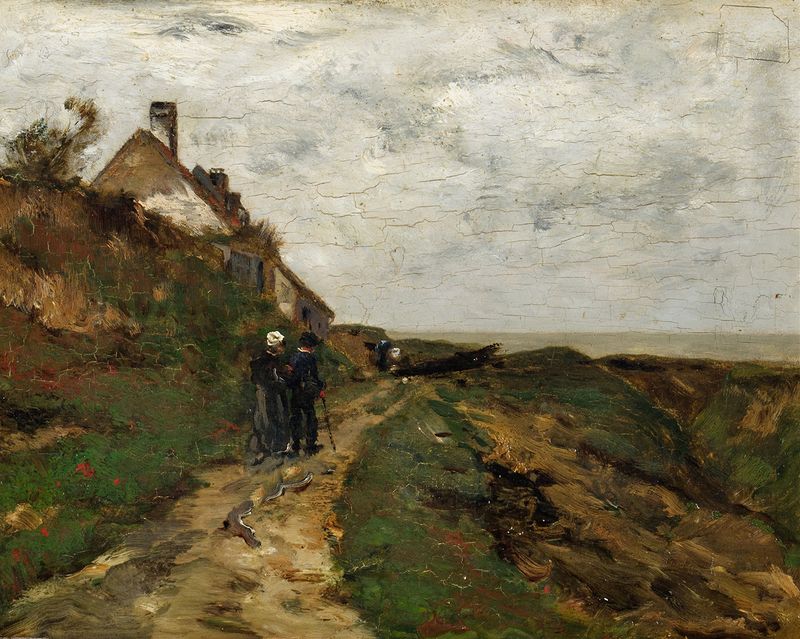
What if beauty was never meant to be finished? The quiet, fleeting moments in life, like the simple act of clam-picking, reveal both the transience of existence and the ever-present decay that surrounds us. Focus on the central figures submerged in soft hues, their silhouettes gently melding with the sandy shore. The muted palette evokes a sense of nostalgia, while the delicate interplay of light captures the shimmering reflections on water. Notice how the artist’s brushwork conveys the texture of the clamshells and the rippling tide, inviting the viewer into a world where each stroke breathes life into the mundane task of gathering. Yet amid this serene tableau lies a poignant tension.
The decay is palpable, suggesting a cycle of life and death, as clams are unearthed from their ocean beds, only to be replaced by the relentless tide. The juxtaposition of the clam-pickers’ labor against the beauty of their surroundings hints at an unending struggle against mortality. Their figures, almost ghost-like in their stillness, speak to the impermanence of both their work and the world around them. Wilhelm von Gegerfelt painted Clam-Pickers in Villerville during a time when the natural scenes were being increasingly celebrated in the art world.
While the exact date of creation remains uncertain, it is likely that this piece emerged during a period when realism was gaining momentum in Europe. This shift reflected both a personal and societal inclination toward capturing the raw essence of life, imbuing everyday activities with deeper significance.