Landscape in Provence — History & Facts
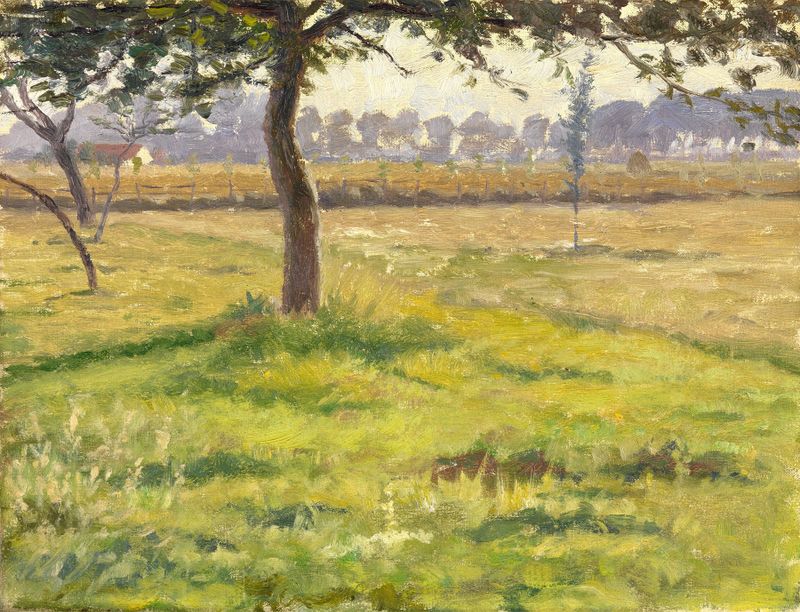
In the quiet embrace of nature, innocence finds its voice through the brushstrokes of a master. What secrets lie in the untouched landscapes we take for granted, and how do they beckon us back to our roots? Look to the center of the canvas, where rolling hills undulate beneath a cobalt sky. The vibrant greens and soft golds intermingle, creating a breathtaking panorama that invites the viewer to wander.
Dabs of creamy white clouds float above, reflecting the serene atmosphere that envelops this pastoral scene. The artist's deft use of light captures the essence of a warm afternoon, illuminating the gentle contours of the earth, as if to whisper a quiet invitation to pause and breathe. Yet, beneath this tranquil surface, there exists an undercurrent of nostalgia. The juxtaposition of vibrant color against the stillness evokes a sense of longing for simpler times.
The vibrant hues suggest a world brimming with life, yet the absence of human figures speaks to the solitude inherent in nature’s beauty. The innocence depicted here resonates deeply—a reminder of what has been lost amidst the chaos of modern existence. In 1900, the artist created this work during a transformative period in France, where Impressionism was giving way to new movements in art. Fernand Scribe, immersed in the natural landscapes of Provence, sought to encapsulate the purity of the countryside.
This era was marked by a quest for authenticity and connection with nature, reflecting a broader cultural yearning for a return to innocence during a time of rapid industrialization.