Pastureland in Flanders — History & Facts
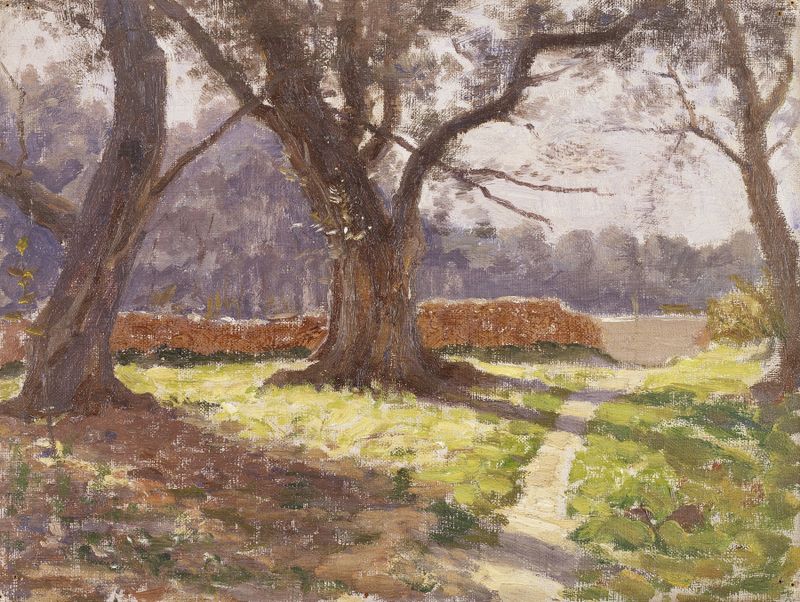
Could beauty survive in a century of chaos? The question hangs in the air as one gazes upon the tranquil expanse of rolling green fields, a serene promise amidst the tumult of the world. Look to the left at the delicate interplay of light and shadow, where the sun filters through soft clouds, casting a gentle glow across the pastureland. The greens are vibrant yet soothing, infused with touches of yellow that evoke warmth and vitality. The composition is thoughtfully balanced, as a meandering path invites the viewer's eye to wander deeper into an idyllic landscape, leading to hints of distant hills that fade into the horizon. Yet, beneath this picturesque surface, one senses an undercurrent of longing and nostalgia.
The horizon appears slightly obscured, suggesting a yearning for what lies beyond reach, a reminder of past joys forever intertwined with loss. The meticulous brushwork captures not only the beauty of nature but also evokes a sense of fleeting moments, where time seems suspended, torn between the serenity of the present and the chaos of memories. Fernand Scribe created this work during an undefined period, yet it reflects an era marked by dramatic social and political upheavals. Working amidst the artistic movements of the late 19th and early 20th centuries, he sought solace in the beauty of the natural world, a stark contrast to the tumultuous changes surrounding him.
This piece becomes a quiet rebellion, a testament to the resilience of beauty against the backdrop of uncertainty.