Landscape near Pangbourne — History & Facts
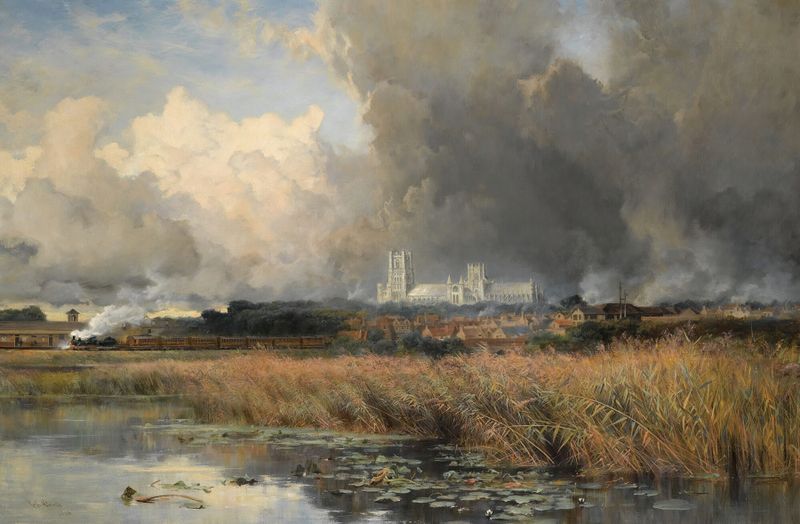
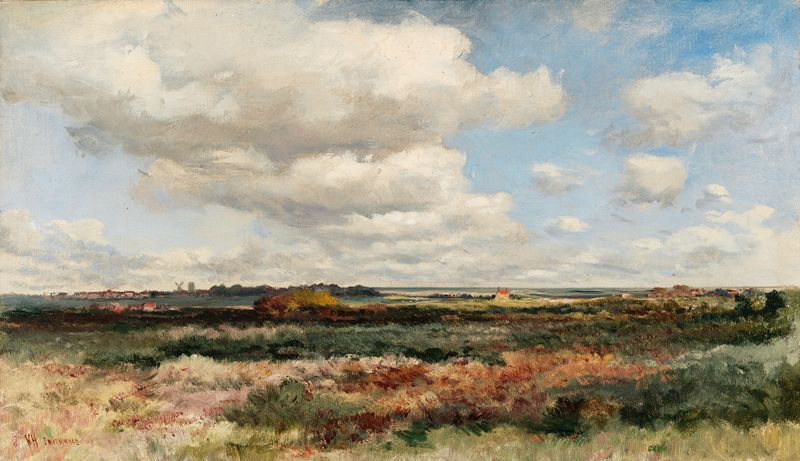
In the quiet solitude of a landscape, we confront not just nature, but the faith that binds our humanity to the world around us. How does the natural world echo our innermost beliefs? Look to the left at the rolling hills bathed in soft, golden light. The gentle curves of the terrain lead your eye toward a distant horizon, where the sky kisses the earth in a serene embrace.
Rich greens mingle with warm earth tones, while delicate brushwork creates a textured surface that invites exploration. The light dances across the canvas, illuminating the subtle variations in the foliage and evoking a sense of peace and tranquility. Yet beneath this placid exterior lies a deeper narrative. Notice the solitary tree standing resilient against the backdrop of a sprawling sky—a symbol of hope amidst life’s uncertainties.
The interplay of light and shadow suggests a duality, a juxtaposition of stillness and the passage of time, reminding us of nature's cyclical beauty. Each detail, from the clouds floating languidly above to the quiet whispers of the grass, holds a profound connection to faith, urging viewers to seek solace and understanding in the natural world. During the mid-19th century, the artist created this work amidst a burgeoning interest in naturalism and the portrayal of idyllic landscapes. Living in England, Halswelle was influenced by the Pre-Raphaelite movement, which emphasized detail and emotional resonance.
This period was marked by a quest for authenticity in representation, reflecting both personal and collective search for meaning in an ever-changing world.