Landscape near Southwold — History & Facts
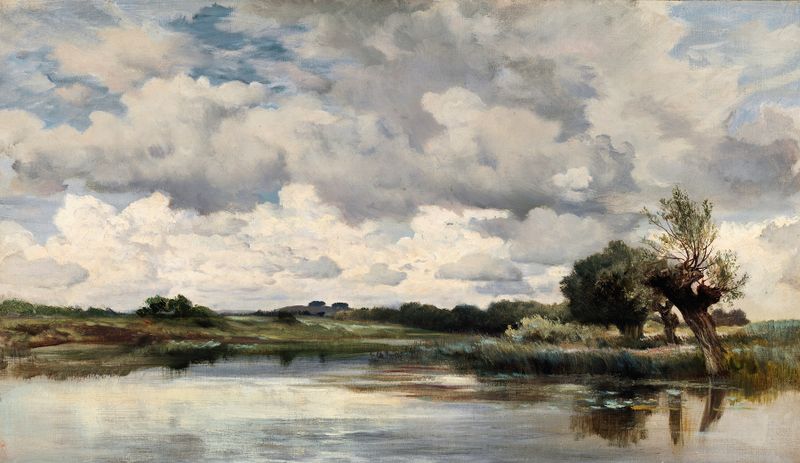
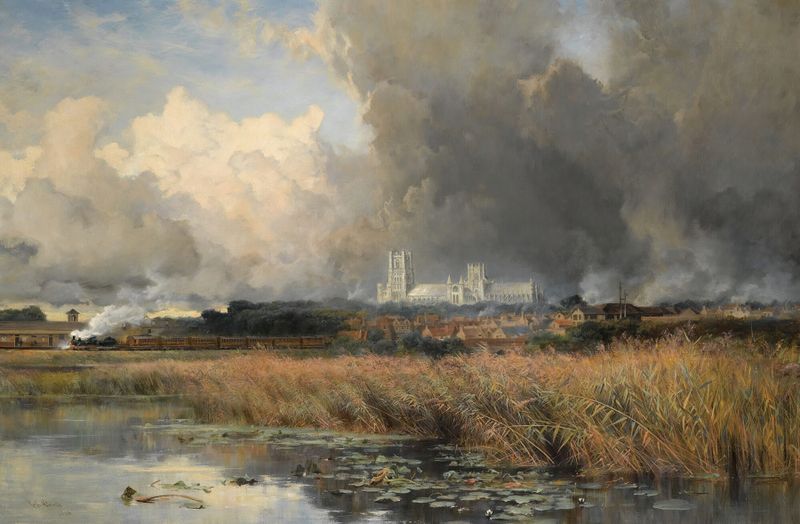
In the fleeting brushstrokes of a landscape, the impermanence of memory collides with the permanence of art, inviting us to explore the poignant beauty of loss. Focus on the horizon, where soft greens merge into wisps of blue, anchoring the viewer within a serene yet melancholic vista. The gentle undulations of the earth capture the eye, guiding it through the layers of color that suggest both tranquility and a haunting stillness. Notice how light filters through the clouds, imbuing the canvas with a bittersweet glow that alludes to memories once vibrant but now faded. In this work, contrasts abound: the lush foreground thrives under the weight of nostalgia, while the muted sky looms with whispers of uncertainty.
Small details, like the solitary figure wandering through the reeds, evoke a sense of isolation and reflect the universal human experience of longing for what has slipped away. Each element, from the swaying grasses to the distant sea, speaks to the transient nature of life and the imprint of time upon our souls. Halswelle painted this piece during the late 19th century, a time when the Pre-Raphaelite movement and the rise of Impressionism were heavily influencing the art world. Working primarily in England, he sought to capture the ethereal quality of natural landscapes during a period marked by rapid industrialization and change.
It was in this context of transformation that he embraced the themes of memory and loss, crafting a visual narrative that resonates deeply within the viewer.