Landscape of a Misty Mountain Scene — History & Facts
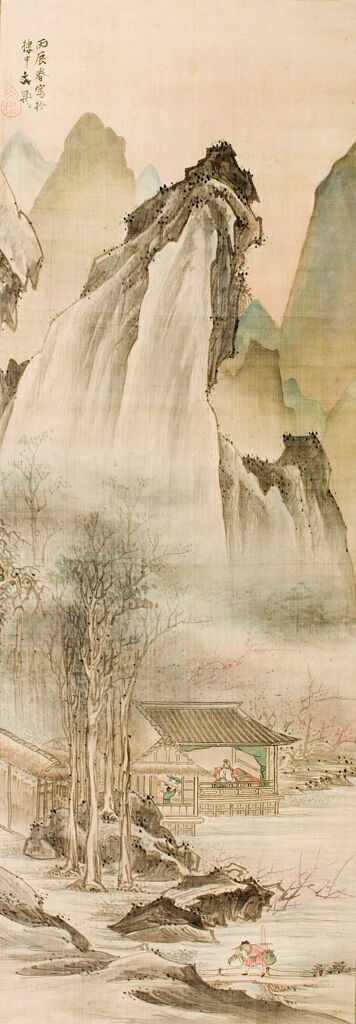
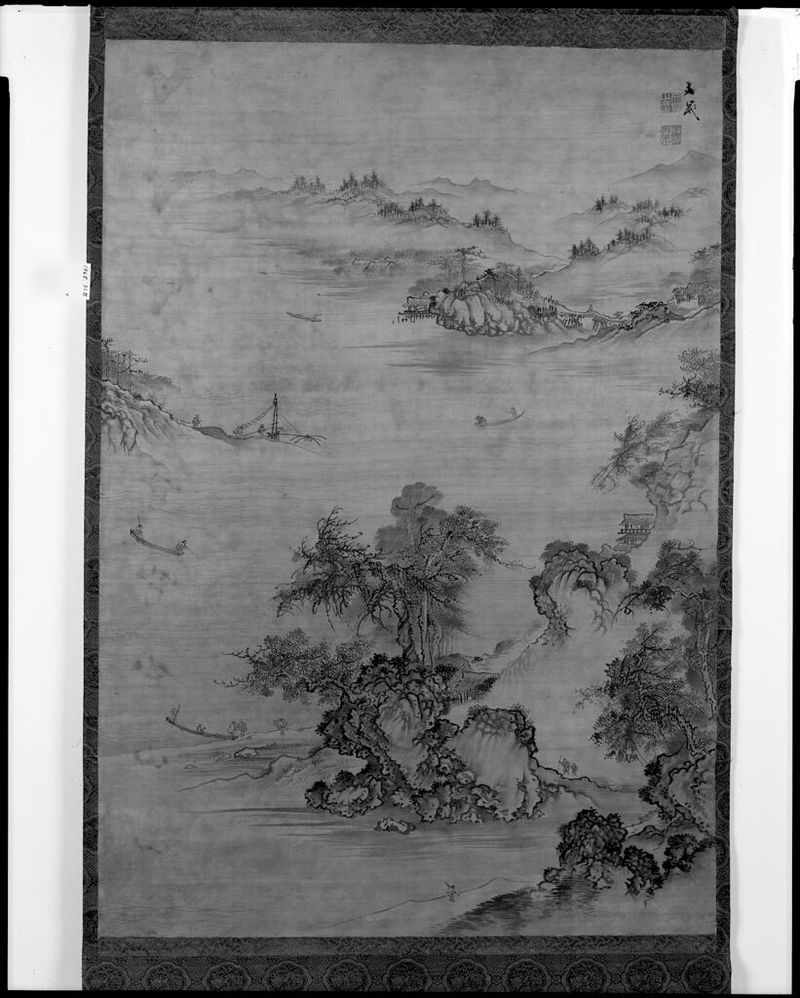
Is this a mirror — or a memory? Each undulating peak, shrouded in mist, whispers of time’s quiet decay, inviting us to lose ourselves in its ethereal embrace. Look to the center, where the mountains rise like ancient sentinels, their soft contours blurred by cascading fog. Tani Bunchō masterfully uses layers of ink and color to create a sense of depth, drawing the viewer into a landscape both serene and haunting. Notice how the subtle gradations of blue and gray evoke a feeling of tranquility, while the delicate brushwork captures the impermanence of the natural world, a fleeting moment suspended in paint. As you explore the canvas, consider the contrast between the permanence of stone and the ephemeral nature of the mist.
The sharp outlines of the mountains stand resolute against their fragile veil, symbolizing the clash between stability and transience. Each brushstroke reflects not just the physical landscape but also a philosophical meditation on life’s inevitable decay, reminding us that beauty exists even as it fades. In 1822, Bunchō painted this piece during the late Edo period, a time marked by a flourishing of artistic expression in Japan amid societal shifts. At this junction, he drew inspiration from traditional Chinese landscapes while infusing Japanese sensibilities, navigating the evolving artistic spheres and personal reflections on mortality and nature.
His work encapsulates a moment of profound introspection, inviting viewers to reflect on their own experiences of memory and loss.