Summer Landscape — History & Facts
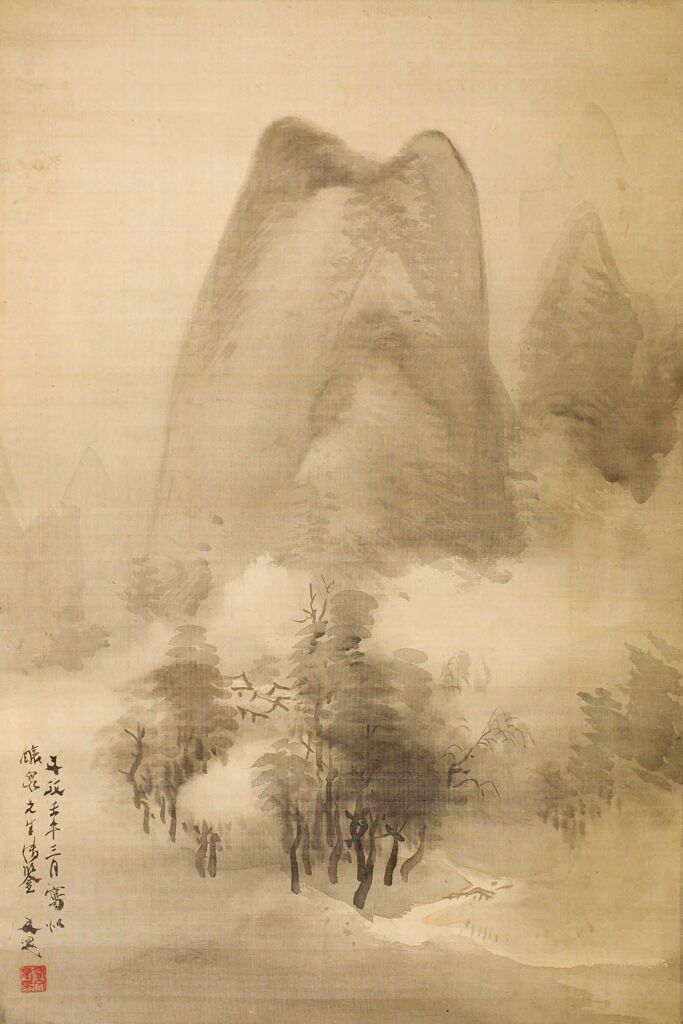
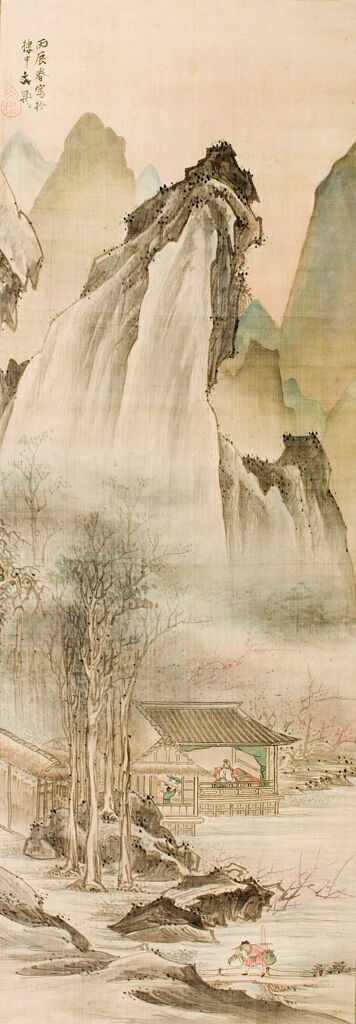
Who listens when art speaks of silence? In the serene stillness of Summer Landscape, the viewer is beckoned into a world where nature breathes, yet time seems suspended. Look to the left at the gentle undulation of mountains, their curves draped in soft greens and blues, while a delicate palette of muted earth tones evokes the tranquility of a summer day. Notice how the subtle brushwork captures the play of light filtering through the foliage, as if inviting you to step into this peaceful realm. The composition draws the eye along a winding river that meanders gracefully through the landscape, leading to distant peaks, creating a sense of depth and inviting contemplation. The emotional tension lies in the contrast between the vibrant, lively hues of the foreground and the muted tones of the background, symbolizing the duality of existence—joy intertwined with melancholy.
The solitary figure, rendered with simplicity, stands amid the lushness, embodying both the insignificance and significance of human presence in the vastness of nature. This juxtaposition speaks to the essence of destiny; how life unfolds quietly, often unnoticed, yet profoundly impactful in its subtleties. Tani Bunchō created this work in 1818 during the late Edo period, a time marked by a flourishing of art and culture in Japan. He was deeply influenced by the natural world and sought to capture its beauty through his landscapes.
As Japan was undergoing significant social and political changes, Bunchō's serene depictions provided a refuge, allowing viewers to connect with the tranquility of nature amidst the tumult of the human experience.