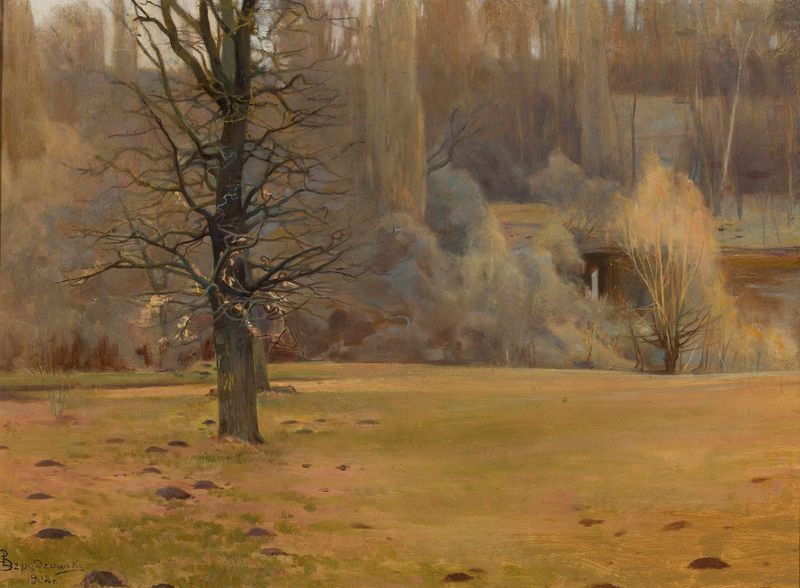
Landscape of fields — History & Facts
The colors in this landscape swirl and collide, creating a dynamic harmony that defies stillness. Each stroke vibrates with life, suggesting a world where nature's vibrancy is just as important as its tranquility. Look to the left at the lush greens that seem to pulse with energy, evoking the feeling of a warm breeze rustling through the fields. Notice how the golden yellows of the wheat dance in the sunlight, interspersed with flecks of deep blue from the distant sky.
The brushwork is both bold and delicate, with swirling textures that invite you to trace the contours of the earth, guiding your eye through a captivating interplay of light and shadow. This symphony of colors reveals not just a scene, but a celebration of the landscape itself. Among the rich palette lies an intricate conversation between chaos and order—the wildness of nature contrasted with the artist's deliberate arrangement. The gentle undulations of the land speak to a sense of movement, while the horizon remains steadfast, a reminder of the eternal cycle of growth and decay.
Each color choice is laden with emotion; the vibrant greens symbolize renewal, while the darker tones hint at the complexities of life beneath the surface. In 1899, Leon Szpądrowski painted Landscape of Fields during a period when Impressionism was gaining traction in Europe. Living in a rapidly industrializing world, he sought solace in nature's beauty, reflecting a desire to preserve the fleeting moments of rural life. This artwork encapsulates his response to the changes around him, embracing both the vibrancy of the natural world and the artistic innovations of his time.