Park fragment — History & Facts
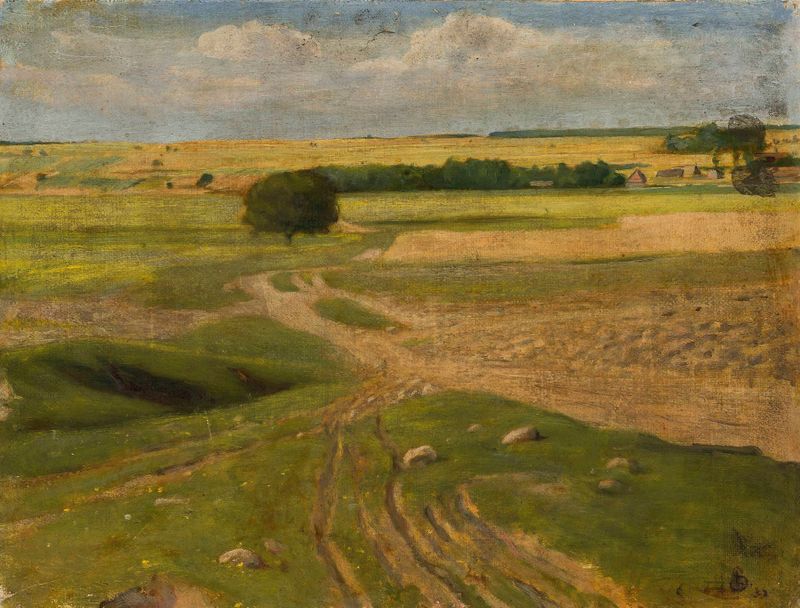
In the stillness of a park, the whispers of revolution linger, unspoken yet palpable, as the world teeters on the brink of change. The canvas invites us to pause, to listen, to feel the weight of unexpressed truths that the surrounding trees seem to guard closely. Look to the left at the deep greens of the foliage, their vibrant hues contrasting against the muted tones of the figures beneath them. Notice how the light filters through the branches, casting dappled shadows on the ground, blurring the boundaries between man and nature.
The composition draws your eye across the canvas, each element carefully placed to evoke a sense of contemplation and unrest. The figures are not overtly animated; their stillness suggests a shared understanding of the tumult brewing beyond the park's idyllic façade. Delve deeper into the subtleties: the posture of a solitary figure, perhaps weary from internal struggle, hints at the emotional turmoil of a society in flux. The juxtaposition of serene beauty and hidden tension in the brushwork reflects the paradox of tranquility amidst impending upheaval.
Each stroke speaks volumes, revealing the disquiet that shadows the park—a haven that cannot escape the reverberations of change. In 1902, Szpądrowski painted this piece during a time of political awakening in Europe, as social currents were shifting and revolts were stirring. Living in Poland, he was influenced by movements in art and society that aimed to break free from convention. His work encapsulated a moment where nature and human experience intersect, mirroring the search for identity amid the broader calls for revolution.