Landscape of San Cristóbal Romita — History & Facts
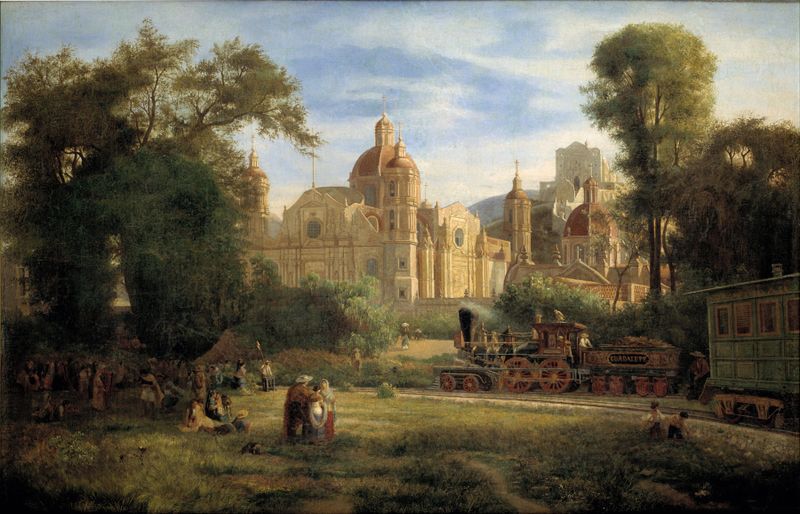
Can paint confess what words never could? In Landscape of San Cristóbal Romita, chaos and tranquility coexist, whispering the secrets of a world caught in transition. Look to the foreground, where vibrant greens and browns clash with the turbulent sky above, creating a sense of unease that lingers. The artist employs a loose brushstroke, allowing the colors to blend and blur, giving life to the foliage while evoking a sense of movement. Focus on how the light breaks through the clouds, casting a surreal glow upon the landscape, illuminating the chaotic brushwork and inviting the eye to wander deeper into the scene. Delve into the contrasts within the painting: the serenity of the fields juxtaposed with the stormy skies hints at the unpredictable nature of life.
The looming mountains echo the weight of uncertainty, while the winding path through the verdant landscape suggests a journey fraught with both peril and hope. Each element is steeped in emotional tension, reflecting the artist's struggle to distill his experience of chaos into a visual language. In 1857, as Luis Coto painted this piece, he was immersed in the rich cultural currents of post-colonial Mexico, where emerging artistic movements sought to capture the essence of the nation. This era was marked by upheaval, and Coto, influenced by both Romanticism and early Realism, aimed to convey the conflicting emotions of his homeland through his landscape.
The work stands as a testament to his introspection amid a rapidly changing world.