
The Collegiate Church of Guadalupe — History & Facts
In moments of solitude, art becomes a refuge, a mirror reflecting our deepest longings and unspoken fears. Look closely at the canvas where the Collegiate Church stands proudly against a brooding sky. Notice the intricate archways and the delicate patterns of light filtering through the clouds, hinting at the passage of time. The cool, muted tones speak of a quiet reverence, as shadows dance across the stone façade, inviting you to explore the sanctuary within.
Each brushstroke captures the textural richness of the architecture, creating a dialogue between the sturdy structure and the ephemeral light surrounding it. A sense of loneliness permeates the scene, accentuated by the absence of figures amidst the grandeur of the church. This emptiness pulls at the heart, raising questions about faith, isolation, and the sacredness of space. The contrast between the monumental church and its desolate surroundings evokes a yearning for connection, suggesting that even in places of worship, one can feel profoundly alone.
Subtle details, such as the weathered stones and the stillness of the air, amplify the weight of solitude, transforming the scene into a poignant reflection on existence. In 1859, Luis Coto painted this work during a period when the Romantic movement was giving way to Realism, grappling with themes of identity and place. Living in Spain, Coto was influenced by the changing socio-political landscape of his time, and his art often sought to express the emotional undercurrents of the human experience. The Collegiate Church of Guadalupe is a testament to his ability to evoke profound feelings through architectural beauty, encapsulating both the spiritual and the solitary in one striking image.
More Artworks by Luis Coto
Browse all →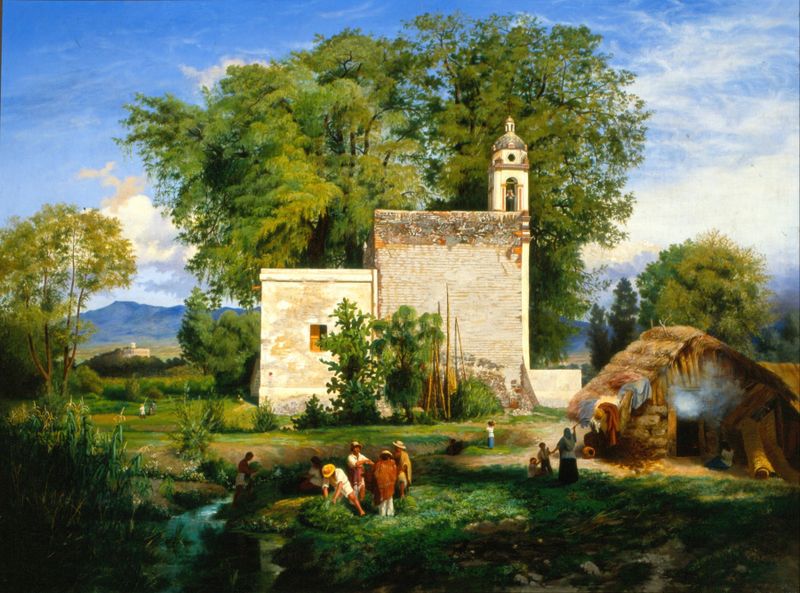
More Architecture Art
Browse all →
The statue of Liberty
Frédéric Auguste Bartholdi

View of Houses in Delft, Known as ‘The Little Street’
Johannes Vermeer

View of Houses in Delft, Known as ‘The Little Street’
Johannes Vermeer

The Cathedral in Rouen. The portal, Grey Weather
Claude Monet

The yellow house
Vincent van Gogh

The Church in Auvers-sur-Oise, View from the Chevet
Vincent van Gogh