Landscape with a Bare Tree and a Plowman — History & Facts
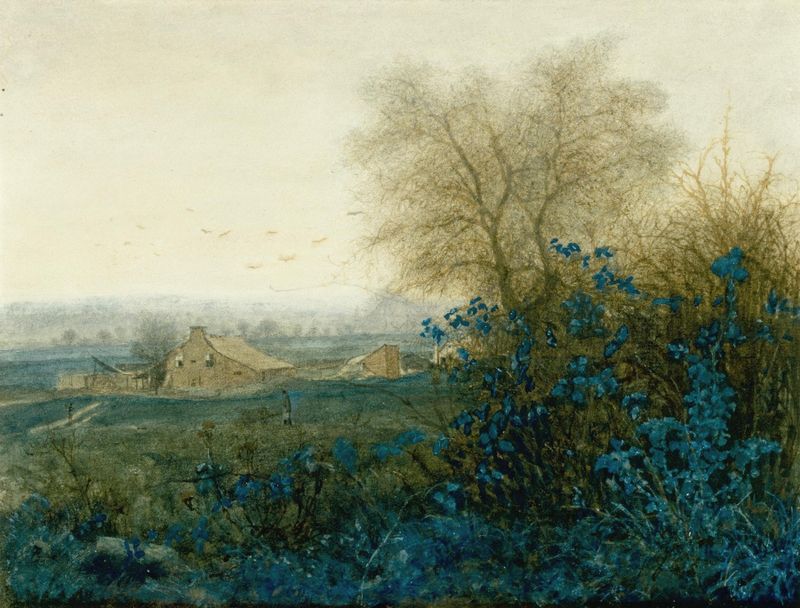
What if silence could speak through light? In Landscape with a Bare Tree and a Plowman, the stillness of the scene beckons contemplative reflection, as if nature itself pauses to listen. Focus your gaze on the foreground where the solitary figure of the plowman draws attention. His presence, slightly hunched with labor, offers a powerful counterpoint to the starkness of the bare tree, which looms against an expanse of muted sky. The earthy browns and soft greens create a harmonious palette, while the delicate brushstrokes capture the rough texture of the plowed earth, suggesting both toil and the promise of new life.
Notice how the light elegantly bathes the scene, illuminating the contours and details that bring it to life, yet simultaneously casting a somber shadow over the solitude of the plowman. In this composition, contrasts emerge — the tension between the dynamic act of cultivation and the stillness of the barren tree, symbolizing the cycle of life and death. The absence of vibrant foliage may suggest a fleeting moment within a larger narrative of change, while the plowman, caught in the rhythm of his labor, embodies the resilience of humanity against the backdrop of nature's silence. Each stroke imbues the landscape with an emotional weight, inviting the viewer to ponder the quiet yet profound relationship between man and the earth. Léon Bonvin painted this work in 1864, during a time of personal turmoil and shifting artistic movements.
Living in France, Bonvin was amidst the rise of Realism, where artists began to embrace everyday subjects and honest portrayals of life. His own journey was marked by struggles with recognition and the pressures of his craft, yet he managed to create works that resonate with depth and introspection, capturing the essence of existence in a single frame.