Landscape with a Farmhouse and a Peasant Wheeling a Barrow — History & Facts
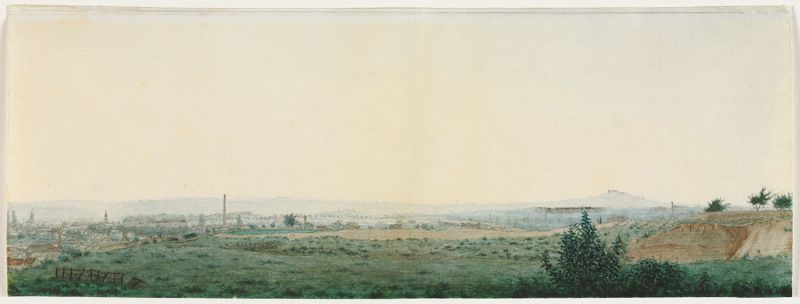
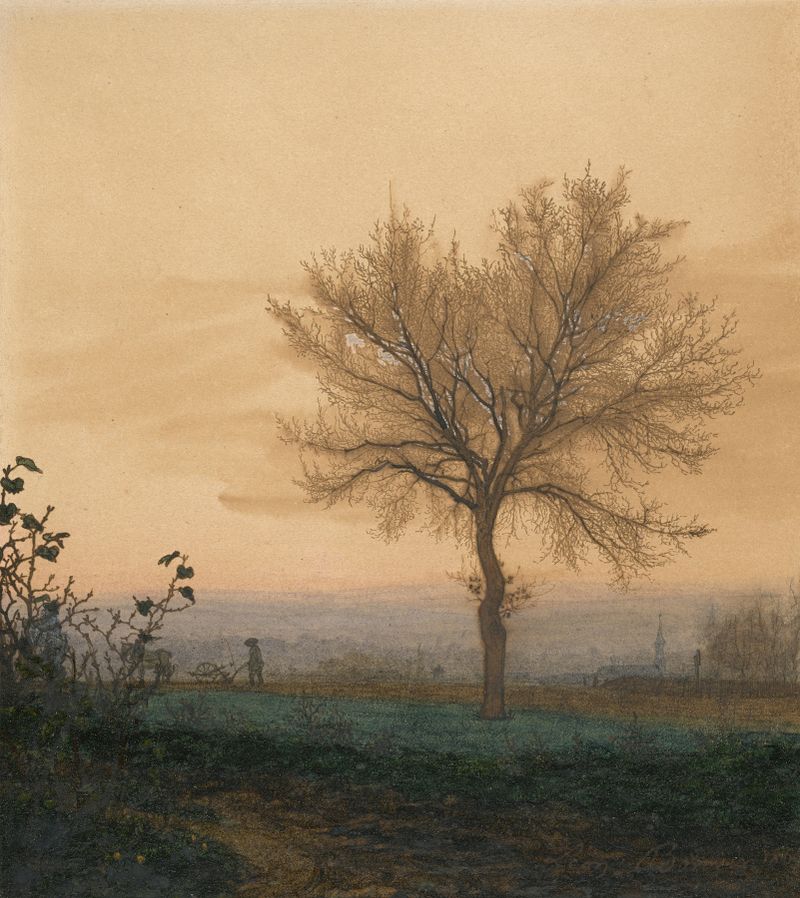
This quiet truth lingers in the delicate brushstrokes of a rural tableau, where the interplay of silence and toil unveils a deeper narrative. Look to the left at the farmhouse, its rustic walls bathed in soft sunlight, evoking warmth amid the muted earth tones surrounding it. Notice how the peasant, hunched over his wheelbarrow, draws our gaze with his laborious posture, embodying the weight of unsung struggles. The artist’s careful layering of textures gives the scene a palpable depth, inviting us to feel the coolness of the shadows cast by the trees that frame this pastoral life. The juxtaposition of the idyllic landscape against the solitary figure speaks volumes; it highlights the isolation found within daily routine.
The vibrant green grass, nearly golden under the sun, contrasts starkly with the peasant’s labor, suggesting an unspoken tension between nature’s beauty and the harshness of human existence. Small details, like the distant birds silently gliding overhead or the stillness of a nearby stream, amplify this quietude, emphasizing that moments of stark beauty can exist alongside a burdensome reality. In 1865, the artist captured this scene during a period marked by artistic transition in France, as realism began to carve its path against the backdrop of Romanticism. Bonvin, working in his native country, sought to portray unembellished truths, drawing from rural life that was often overlooked.
This work reflects his commitment to authenticity, mirroring the lives of ordinary people during a time of profound change in society and art.