Landscape with a Cave — History & Facts
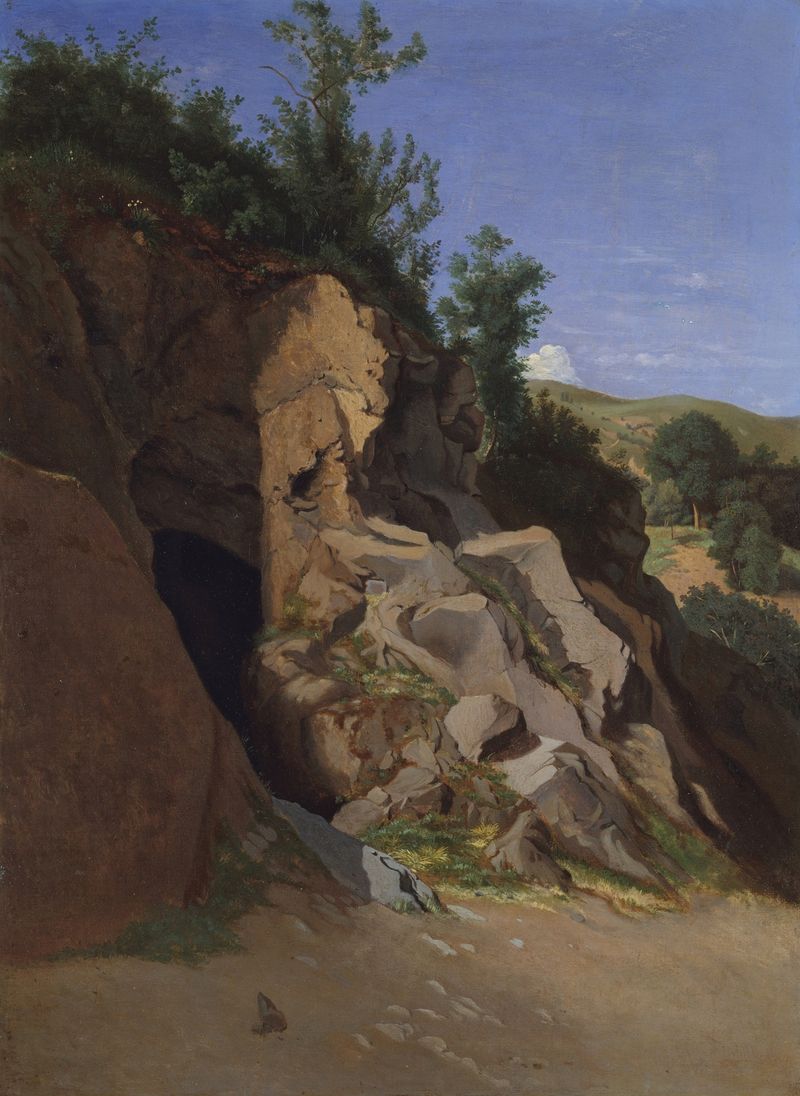
Can beauty exist without sorrow? In the delicate interplay of light and shadow, the landscape captures an essence both haunting and serene, revealing the duality of existence. Look to the left at the cave’s mouth, where darkness yawns invitingly, contrasting sharply with the vibrant greens of the surrounding foliage. The strokes are soft yet deliberate, conveying the texture of the earth and the gentleness of nature’s embrace. Notice how the sunlight filters through the trees, creating dappled patterns on the ground, leading your eye deeper into the scene.
The artist’s use of a muted palette imbues the work with a sense of calm, while the subtle tension between the cave’s threatening void and the lush life outside speaks to the profound complexity of the human experience. The cave stands as a metaphor for hidden depths within the beauty of the landscape, suggesting the presence of untold stories and sorrows that lie beneath the surface. The juxtaposition of light and dark not only evokes a sense of peace but also hints at the inevitable shadows of life. Here, nature is a silent witness to the truths that often go unspoken, embodying the complexities of hope and despair intertwined in the tapestry of existence. The artist created this piece at an uncertain time, in the early 19th century when Romanticism was beginning to flourish in France.
Working in Paris, he was influenced by the ideals of his contemporaries, who sought to express the sublime beauty of nature and the emotional resonance it held within the human spirit. This work reflects an ongoing quest for truth amidst the chaos of life, resonating with both the artist’s personal experiences and the broader artistic movements of his time.