The Bathers, Souvenir of the Banks of the Anio River at Tivoli — History & Facts
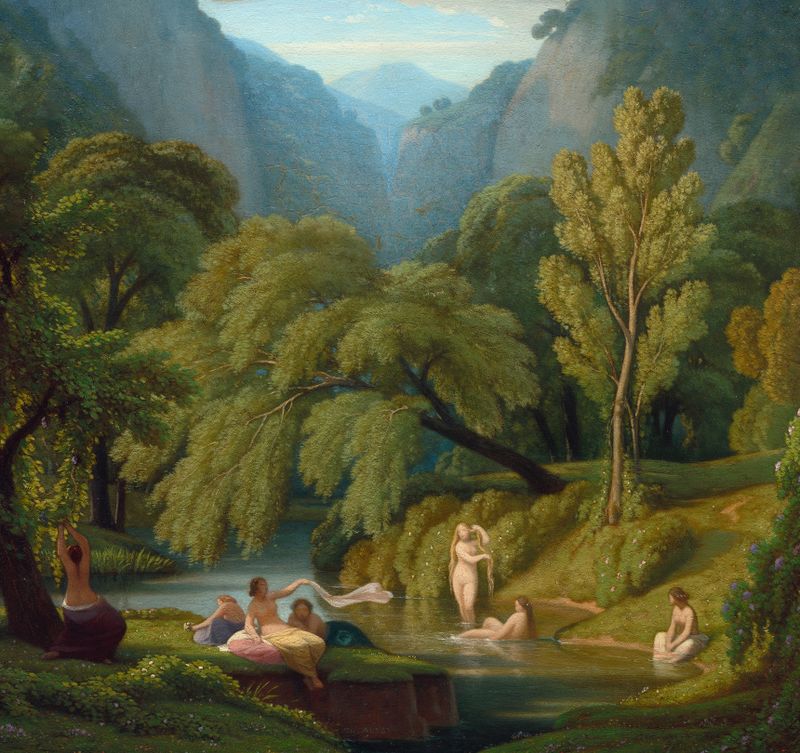
In the stillness of The Bathers, we find a moment that transcends mere observation, inviting us to ponder the shared intimacy of human experience amidst nature's embrace. Focus first on the tranquil waters, where reflections shimmer under a subtle light. Notice how the gentle undulation of the river mirrors the soft curves of the figures that populate the canvas. The artist's delicate brushwork reveals an interplay of greens and blues, evoking both serenity and a whisper of nostalgia.
As your gaze travels from the figures to the landscape, you can almost hear the rustling leaves and the distant murmur of the river, drawing you deeper into this pastoral serenity. Beneath the surface, the juxtaposition of the bathers’ relaxed poses against the vibrant vitality of the surrounding nature speaks to the delicate balance of humanity and the natural world. The figures are not just bathing; they are absorbing the essence of their environment, suggesting themes of renewal and communal connection. Each figure’s pose and expression seems to convey a quiet contemplation, hinting at the layers of thought and emotion that lie beneath the serene surface. Created between 1860 and 1861, this work emerged during a period of significant artistic exploration in France.
The artist, Théodore Caruelle d'Aligny, found inspiration in the picturesque settings of Italy, specifically the Anio River near Tivoli. This was a time when Romantic ideals were beginning to intertwine with more naturalistic approaches, reflecting both personal and societal shifts within the world of art.