
Landscape with a Goatherd — History & Facts
When did color learn to lie? In Landscape with a Goatherd, the hues whisper of serenity, beckoning the viewer to a realm where truth and illusion intertwine. Look to the center, where the goatherd stands, his form a gentle contrast to the lush greens and vibrant blues that envelop him. The brushwork is soft and deliberate, guiding your gaze across the undulating hills that stretch into the horizon. Notice how the sunlight filters through the trees, casting dappled shadows that dance upon the ground, inviting a sense of peace and quiet contemplation. Yet, beyond the tranquil veneer, tension simmers beneath the surface.
The goatherd’s posture—slightly hunched—suggests a burden, hinting at the weight of responsibility that accompanies a life in nature. The idyllic landscape, while visually stunning, serves as a backdrop to the solitude that often accompanies pastoral life, reflecting both the beauty and isolation inherent in rural existence. In the mid-17th century, Adam Pynacker painted this piece in a Europe grappling with artistic transformation. Coming from the Netherlands, he was influenced by the burgeoning Baroque movement, which sought to capture the interplay of light and shadow.
The era was marked by an appreciation for landscape painting as a distinct genre, and Pynacker’s work exemplifies this shift, celebrating both nature's grandeur and the intimate narratives woven within it.
More Artworks by Adam Pynacker
Browse all →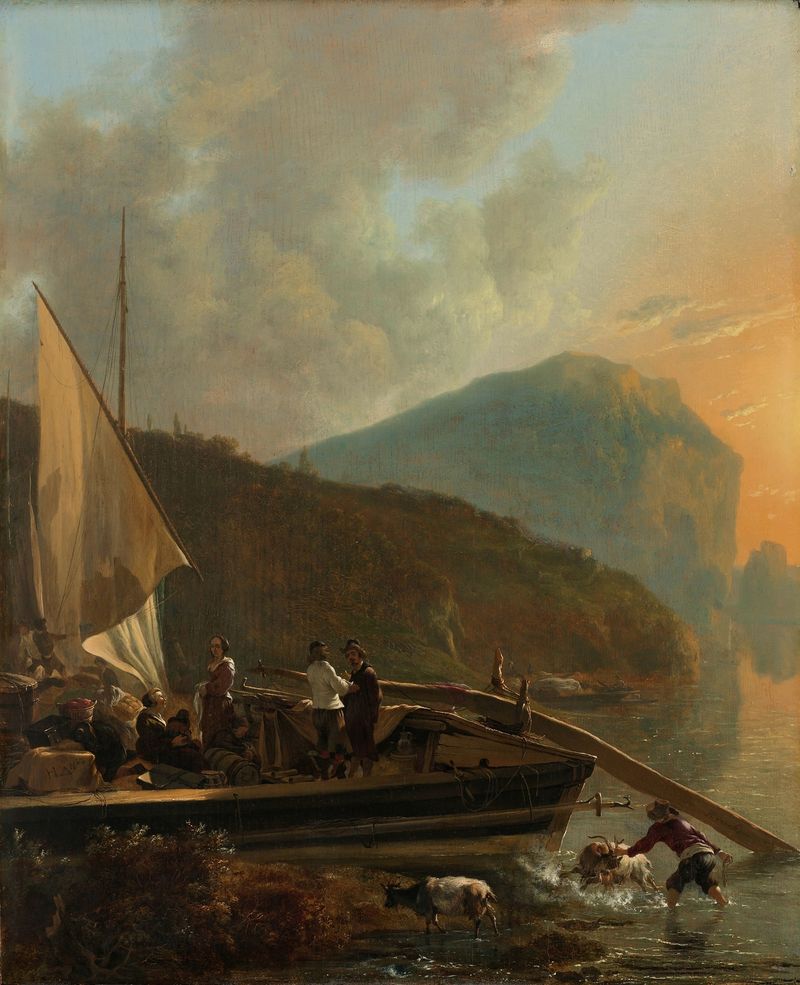
Italianate River Landscape
Adam Pynacker
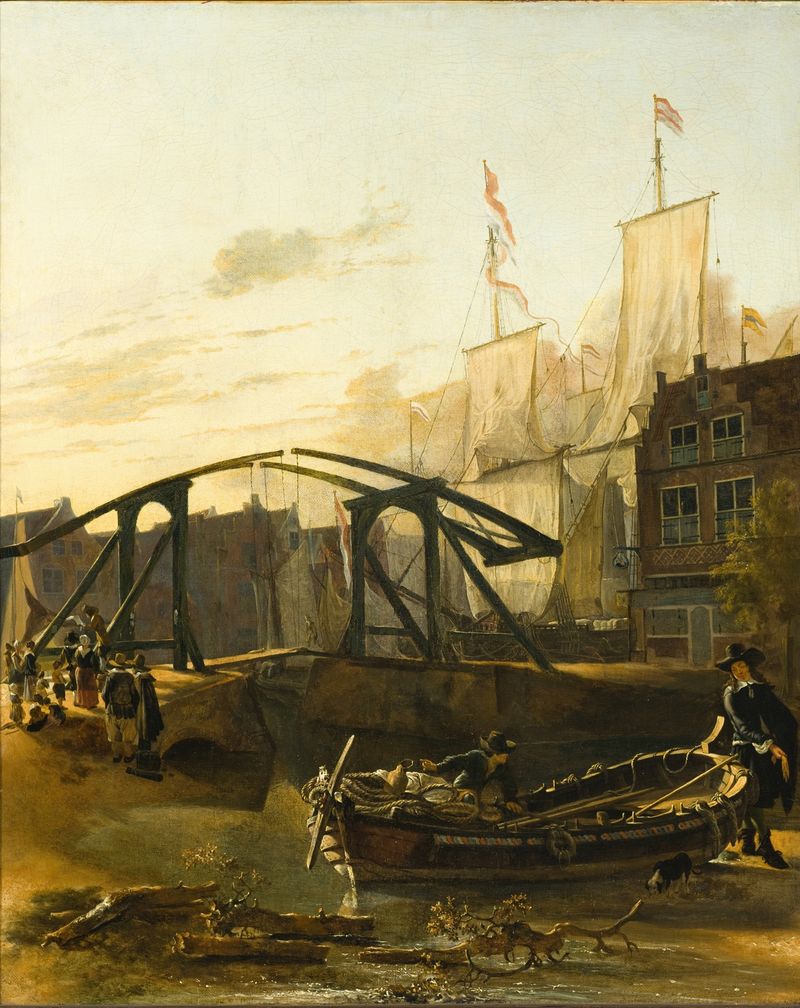
View of a Harbor in Schiedam
Adam Pynacker

Mountainous Landscape with Waterfall
Adam Pynacker
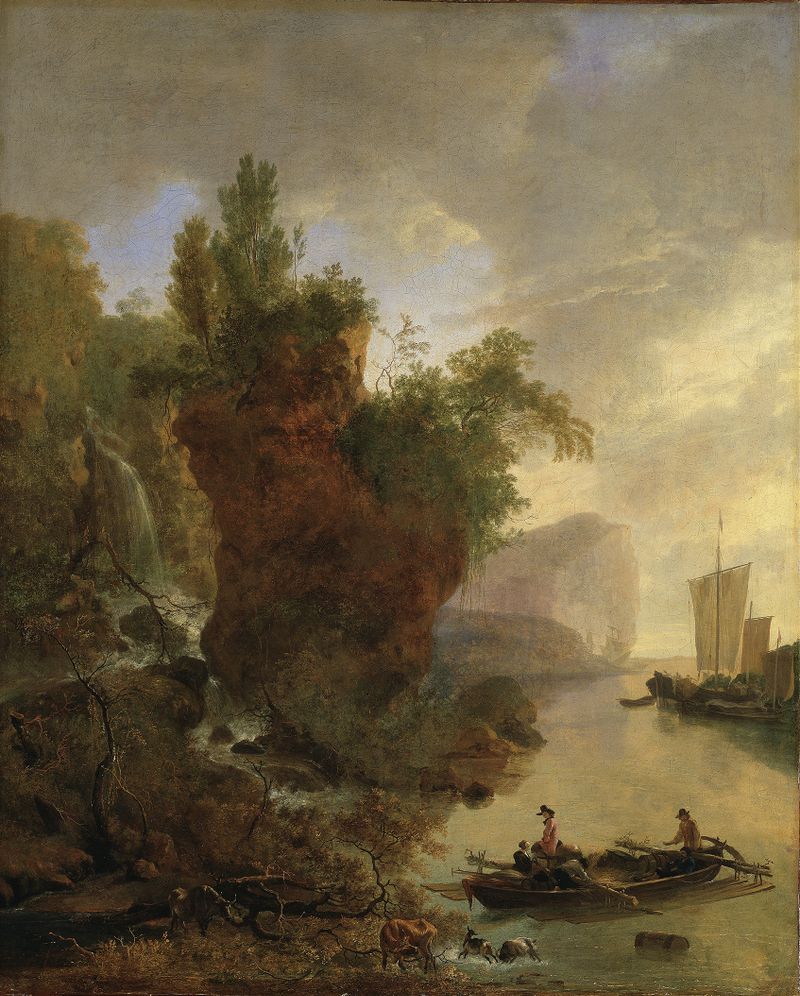
Bay with a Rocky Coast
Adam Pynacker
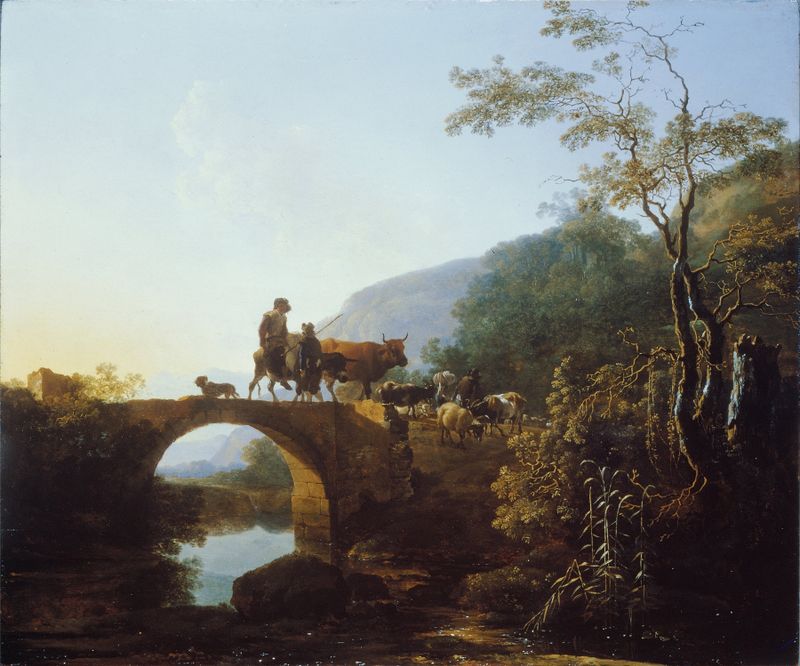
Bridge in an Italian Landscape
Adam Pynacker

Italian Landscape with Ancient Tempietto
Adam Pynacker
Landscape
Adam Pynacker

Landscape with cattle
Adam Pynacker
An Italianate Landscape With A Traveller On A Path By A Waterfall
Adam Pynacker

A waterfall
Adam Pynacker





