Landscape with a lake in the mountains — History & Facts
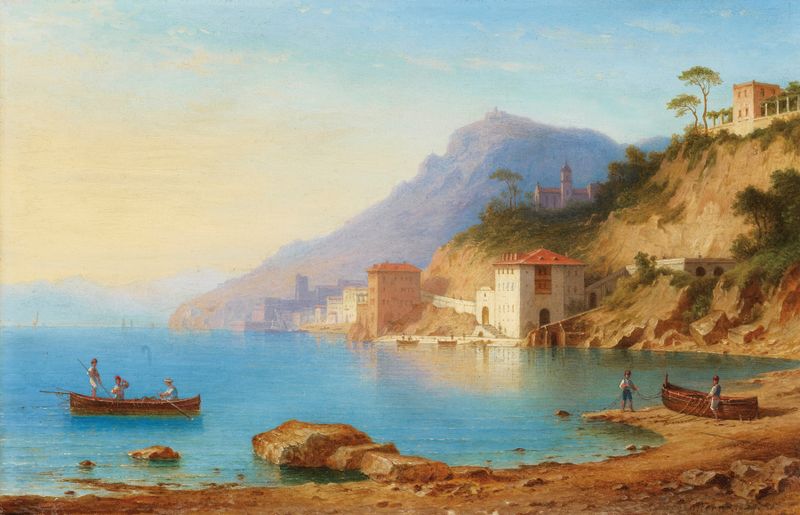
What if silence could speak through light? In Landscape with a lake in the mountains, the interplay of light and shadow conjures a tranquil yet haunting atmosphere, inviting the viewer to confront the unspoken emotions that linger in the stillness. Focus on the shimmering surface of the lake at the center of the canvas, where soft blues and greens create a mirror-like reflection of the towering mountains enveloping it. Notice how the mist dances near the water's edge, blurring the boundary between reality and illusion. The strokes are both deliberate and loose, evoking a sense of serenity while hinting at the underlying uncertainty tethered to nature’s enormity. The contrast between the tranquil lake and the imposing mountains creates an emotional tension that is palpable.
Small details, such as the delicate ripples on the water and the darkening sky above, signify the fragile boundary between peace and fear, as if the landscape itself is holding its breath. This duality reflects the artist’s exploration of the sublime—a reminder that beauty often exists hand in hand with anxiety. In 1920, Carl Ernst Morgenstern painted this piece during a period of post-World War I introspection in Germany. The nation was grappling with its identity, and the art world was in flux, evolving through movements like expressionism.
In this context, Morgenstern's work reflects both a desire for escape into nature and an underlying fear of the uncertainties that lay ahead, creating a profound connection between the artist's surroundings and the emotional landscape he portrayed.