Landscape with a Tall Tree — History & Facts
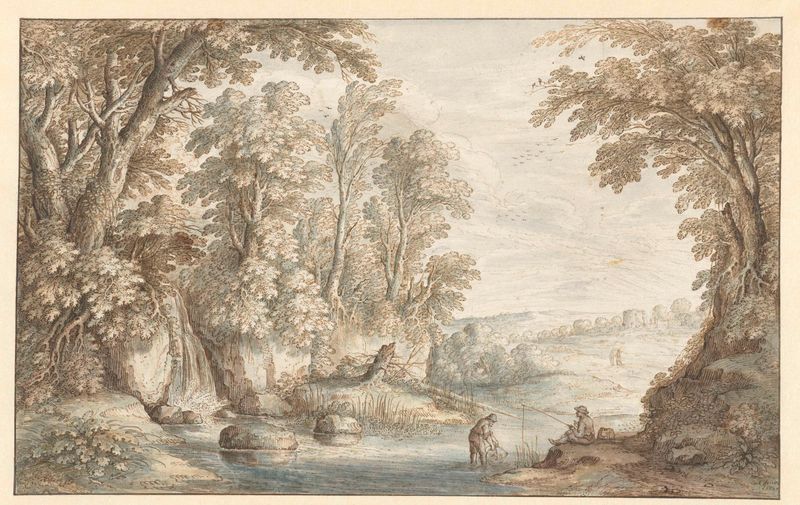
In a world teetering on the edge of revolution, art breathes life into the stillness of nature, capturing the tension between tranquility and impending change. Look to the left at the towering tree, its gnarled branches stretching towards the sky, framed against a backdrop of billowing clouds. The rich greens and earthy browns blend seamlessly, reflecting the artist's mastery of color and texture. Notice how the light dances through the leaves, illuminating patches of grass below, creating a contrast that draws your eye into the depth of the landscape.
The careful composition invites contemplation, suggesting both solitude and connection. Beneath the serene surface lies a tension that hints at the broader societal shifts of the time. The tall tree, an emblem of endurance, stands against a backdrop that symbolizes nature's resilience amid change. Shadows creep along the ground—their slow movement mirroring the uncertainty of the era.
The small, subtle figures in the distance evoke a sense of transience, reminding us that beneath the surface of beauty, significant transformations are always at play. Marten de Cock painted this piece in 1634, during a time when Europe was rife with conflict and transformation. The Dutch Golden Age was in full swing, with artists exploring new styles and subjects. De Cock, based in Haarlem, was part of this rich artistic dialogue, seeking to capture the essence of the natural world while reflecting the evolving sentiments of society.
In this work, he melds the serene with the profound, echoing the whispers of change that were beginning to ripple through the landscape of his time.