Landscape with the Ruins of a Round Tower — History & Facts
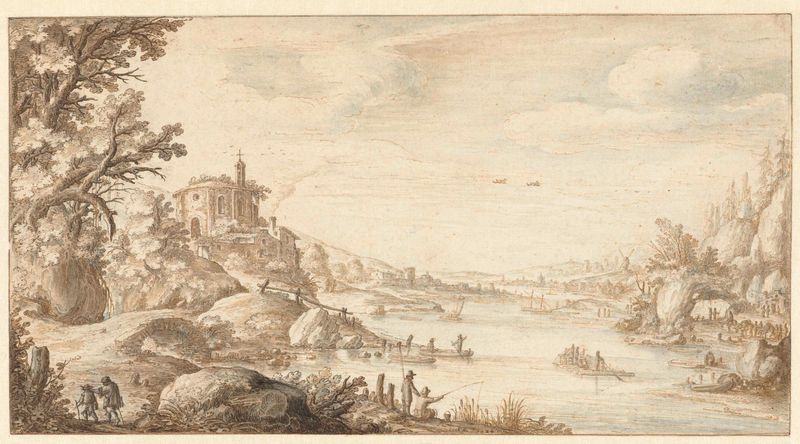
In the interplay of muted hues and gentle shadows, revelations await those who dare to look deeper. Focus on the delicate interplay of earth tones, where soft greens and browns cradle the remnants of a round tower. The structure, though crumbling, stands resolute against the backdrop of a vast sky, a poignant reminder of the passing of time. Notice how the light bathes the scene—illuminating the edges of the ruins—while darker areas whisper of forgotten histories and untold stories.
The composition strikes a balance between decay and the natural world, inviting contemplation of permanence amid transience. Hidden within the details of this landscape is a dialogue between nature and human endeavor. The round tower, a symbol of strength, is juxtaposed by the encroaching vegetation, illustrating the inevitable reclaiming of the earth. Additionally, the serene water in the foreground reflects both the ruins and the sky, suggesting a moment of reflection for the viewer.
This duality evokes a sense of loss intertwined with a quiet beauty, provoking thoughts on the passage of time and the cycles of creation and destruction. Created in 1625, this work emerged from the skilled hands of Marten de Cock during a period of transition in Dutch painting. Living in Haarlem, he was influenced by the burgeoning styles of the time, navigating between realism and the poetic landscapes that defined the era. His approach to depicting ruin not only serves as a testament to the artistry of the time but also resonates with a collective search for meaning amidst an ever-changing world.