Landscape with a Tholos — History & Facts
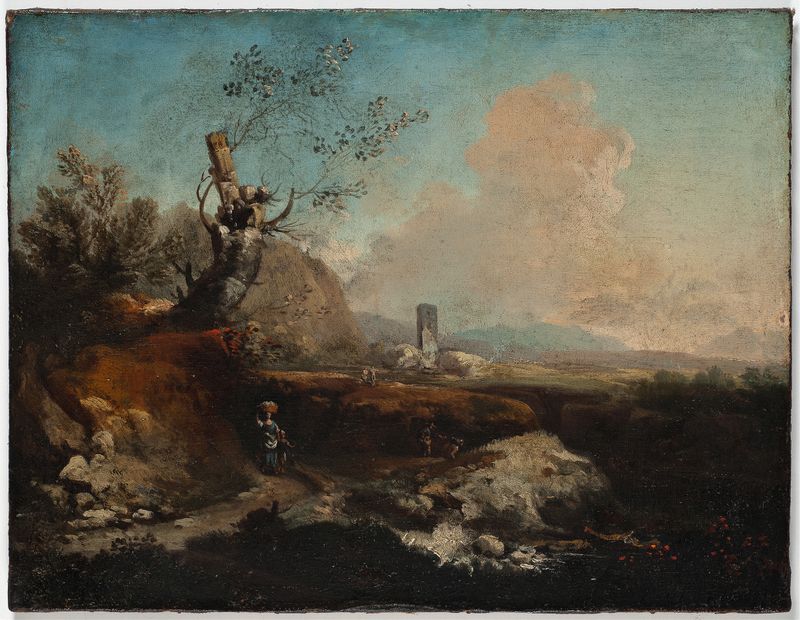
In its stillness, it captures the heart's quiet betrayals, urging us to look deeper into its layers and colors. Focus on the tholos, the circular structure that stands proudly in the foreground, almost beckoning the viewer to step closer. Notice how the muted greens and browns of the landscape cradle it, contrasting with the sharpness of the stone. The sky above, brushed with soft pastels, hints at a quiet dawn or dusk, enveloping the scene in a sense of unresolved tension, as if the moment is suspended between hope and despair. The emotional undercurrents of this piece lie in the juxtaposition of the tholos against the surrounding nature.
While the structure suggests stability and permanence, the fluidity of the landscape around it evokes fragility and change. The viewer can sense an unspoken story of abandonment or longing, as if the tholos has witnessed untold secrets and heartaches, an architecture of dreams now overshadowed by the passage of time. De Marchis created this work during a period of personal exploration, likely in the late 17th century, when he was establishing his unique style that blended classical elements with emerging Baroque influences. Living in Italy, he was part of a dynamic art scene that oscillated between the traditional and the innovative, reflecting the broader societal shifts of the era.
This painting encapsulates those tensions, offering a glimpse into both the artist’s psyche and the cultural milieu surrounding him.