Landscape with a Tower — History & Facts
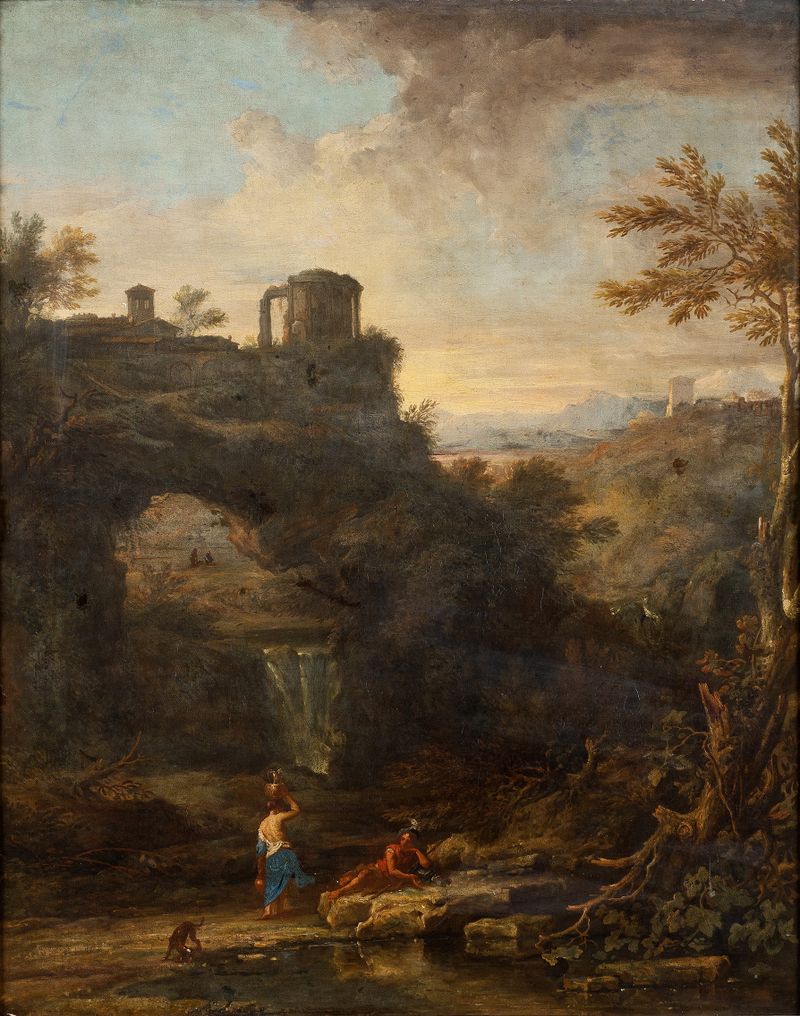
Where does light end, and longing begin? In the delicate brushstrokes of Landscape with a Tower, the answer lies hidden among the shadows and illuminations of a world on the brink of transformation. Look to the horizon, where the gentle hues of twilight merge with the tall, solitary tower, a silent sentinel against the fading light. The composition draws the eye upward, leading through soft earth tones that reflect a quiet resilience. Notice how the interplay of light and shadow across the landscape creates a palpable tension, echoing whispers of both hope and despair.
The tower, with its stark verticality, stands in contrast to the expansive sky, a reminder of human ambition amidst nature’s vastness. Deep within this serene panorama lies a subtext of revolution, where the tower symbolizes aspiration, perhaps an unfinished dream or the remnants of a once-vibrant civilization. The muted palette contrasts with the sharp angles of the structure, suggesting a struggle between the forces of nature and human endeavor. Each blade of grass sways with the promise of change, hinting at the potential for renewal, even amidst stillness.
It’s a moment captured in time, where the melancholic beauty of the landscape resonates with deeper existential questions. Alessio de Marchis painted Landscape with a Tower in an era marked by artistic transition, likely during the early Renaissance in Italy. His work reflects a growing interest in the interplay of nature and architecture, as well as an exploration of emotional depth within landscape painting. At this time, the artistic community was beginning to embrace the idea of individual expression, setting the stage for a future rich with innovation and change.