Landscape with an Aqueduct — History & Facts
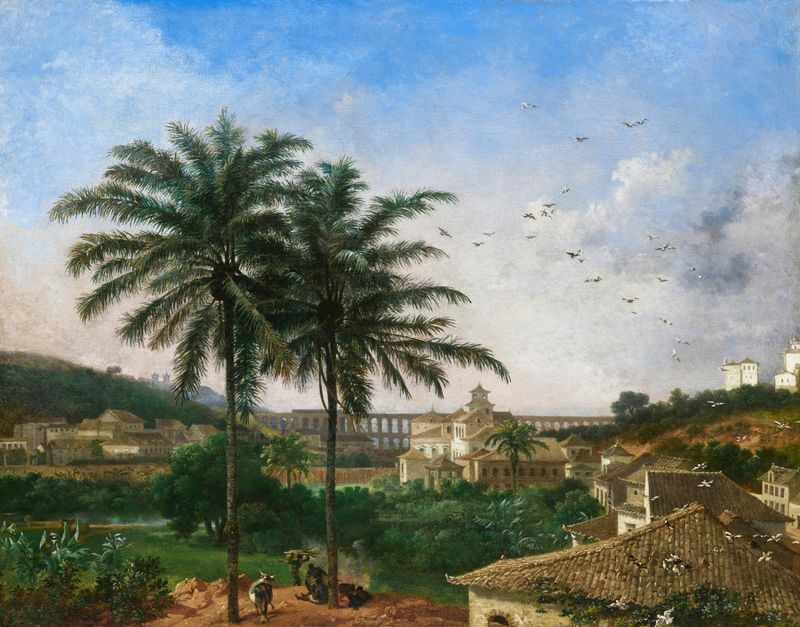
What if silence could speak through light? In Landscape with an Aqueduct, the stillness of the scene captures a dreamlike essence, inviting viewers to lose themselves in its tranquility. Look to the center, where the grand aqueduct arches gracefully against the horizon, its stones bathed in warm, golden sunlight. Notice the subtle interplay of shadow and illumination as it curves through the verdant landscape, leading the eye deeper into the composition. The lush greens and earthy browns create a harmonious palette, while the wispy clouds overhead add a sense of motion, contrasting with the solid permanence of the stone structure. Hidden within this serene landscape lies a delicate balance between nature and human ingenuity.
The aqueduct not only serves as a functional element but also as a metaphor for the connection between civilization and the natural world. Observe the gentle flow of the stream below, whispering stories of time as it weaves through the tranquility, suggesting life continues beyond the confines of the painted frame. This quiet tension between the manmade and the organic evokes an emotional resonance, reminding us of our place within the vast tapestry of existence. In 1810, Taunay created this work while in Brazil, a time when he was deeply influenced by the lush landscapes of his surroundings.
As an artist of the neoclassical movement, he sought to capture both the beauty of nature and the marks of human progress. His experiences during this period shaped his unique vision, blending meticulous observation with imaginative interpretation, ultimately rendering a landscape that speaks volumes through its silence.