Landscape with Cattle — History & Facts
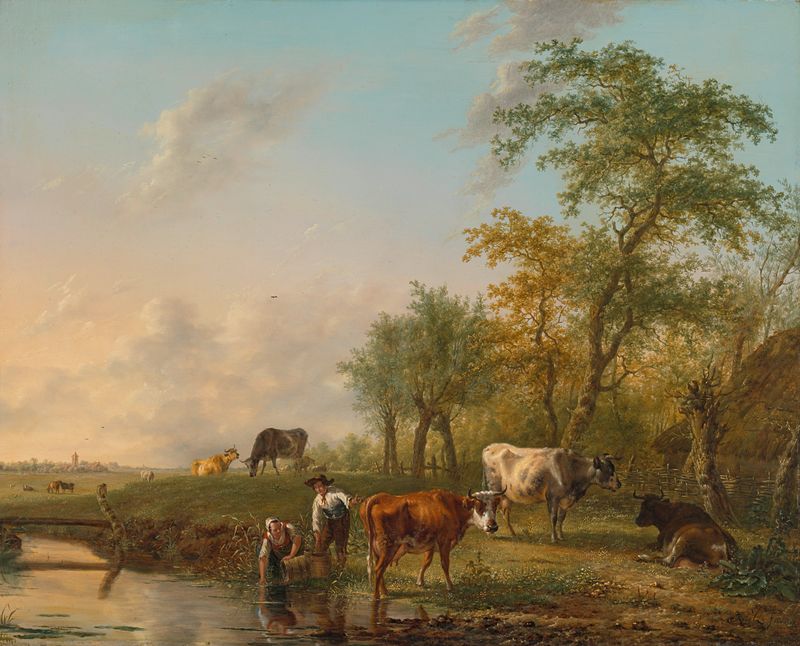
Can paint confess what words never could? In Landscape with Cattle, a serene pastoral scene unfolds, inviting contemplation on the beauty of life and the specter of mortality. Look to the center of the canvas, where a gentle herd of cattle grazes, their forms rendered in soft browns and creams. The lush greenery swells around them, each blade of grass meticulously painted to evoke the essence of nature's abundant life. Notice how the dappled sunlight filters through the branches overhead, creating a play of light and shadow that imbues the scene with a sense of calm yet fleeting existence. The juxtaposition of peace and transience is palpable.
While the cattle appear tranquil, they symbolize the delicate balance of life, suggesting that beauty exists alongside the inevitable decay of time. The distant hills, shrouded in a soft haze, hint at both refuge and the unknown, as if to remind the viewer of life’s impermanence. Each detail, from the gentle ripples in the water to the distant figure of a shepherd, underscores a profound dialogue between the natural world and our own fleeting presence within it. Jan Kobell II painted this work in 1804, during a time when neoclassical influences were prevalent in the art world.
His relocation to The Hague marked a turning point in his career, as he began to focus more intently on landscapes and animal studies. This period was also characterized by a growing appreciation for the Dutch masters, which deeply influenced his approach to light and composition, shaping his exploration of life’s transient beauty within his works.