Landscape with Cattle — History & Facts
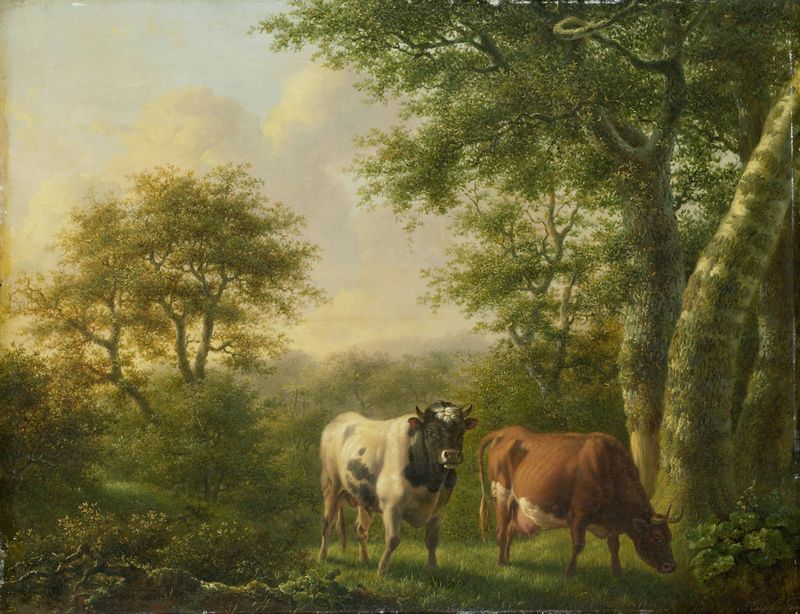
What secret hides in the quiet of the canvas? In the stillness of this idyllic landscape, the passage of time whispers through the gentle decay of nature. Look to the horizon where soft, muted greens meld with the earthy browns of the cattle dotting the foreground. Notice how the brushwork captures the subtle textures of the animals’ coats, each stroke revealing their presence as if breathing life into the serene composition. The sky, dappled with wisps of clouds, casts a delicate light over the scene, illuminating the rich colors while leaving shadows that suggest a deeper narrative beneath the placid surface. Yet, upon closer inspection, one can sense an undercurrent of tension.
The decaying foliage at the edges hints at transience and the inevitability of change, contrasting sharply with the robust figures of the cattle, which symbolize both life and the weight of existence. The muted palette evokes a feeling of nostalgia, as if the viewer is peering into a moment on the brink of transformation, where beauty is intertwined with the melancholy of decay. In 1827, while residing in Belgium, Engel painted this work during a period marked by a growing appreciation of the natural world as a subject in art. This era saw a shift away from strict academic traditions toward a more expressive portrayal of landscapes, influenced by Romantic ideals.
Engel’s exploration of the rural scene reflects both personal and societal changes, capturing a world on the cusp of industrialization, where nature's quiet beauty coexisted with the shadows of an uncertain future.