Landscape with Classical Ruins — History & Facts
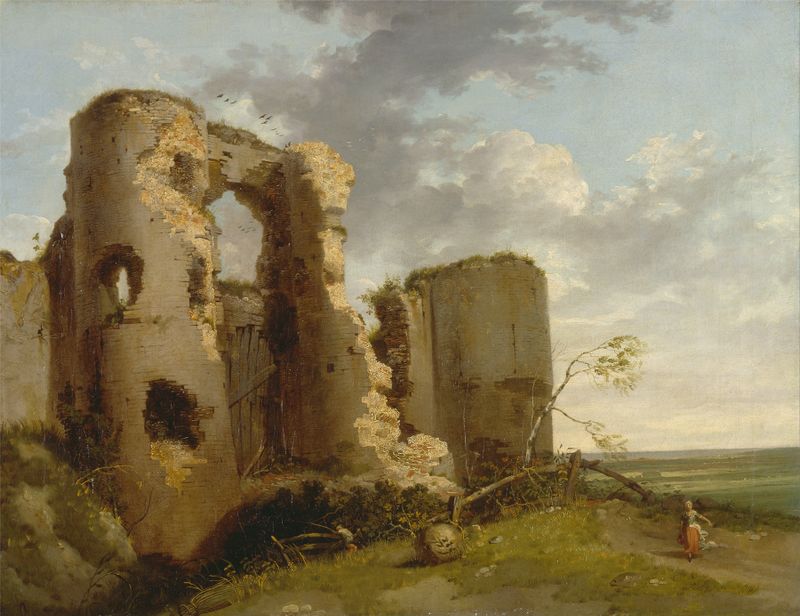
Is this a mirror — or a memory? In Landscape with Classical Ruins, a haunting reminder of the past beckons, inviting viewers to contemplate the remnants of a time long gone, echoing a deep yearning within each of us. Look to the left at the crumbling columns, their shadows stretching gracefully across the verdant landscape. The artist expertly uses muted greens and soft earth tones, creating a sense of nostalgia that envelops the scene. Notice how the light filters through the wispy clouds, illuminating the ruins while leaving the surrounding foliage in half-shadow; this juxtaposition heightens the melancholic beauty of the composition and draws the viewer into a world suspended between memory and reality. Deeper insights can be found in the tranquil waters that mirror the ruins, creating a visual connection to both the land and history.
The rippling surface suggests the passage of time, while the placement of the structure in the background hints at a longing for the sublime, a desire to bridge the gap between the present and a glorious past. These elements together evoke a sense of loss yet simultaneously inspire reflection on the fragility of human achievement. During the late 18th century, when the painting was created, Mortimer was deeply influenced by the romanticism of his time, which sought to depict humanity's relationship with nature. His work emerged amidst a wider artistic movement that celebrated the picturesque and the sublime, illuminating not only the external world but also the internal emotions of the viewer.