Landscape with dancing Bacchantes — History & Facts
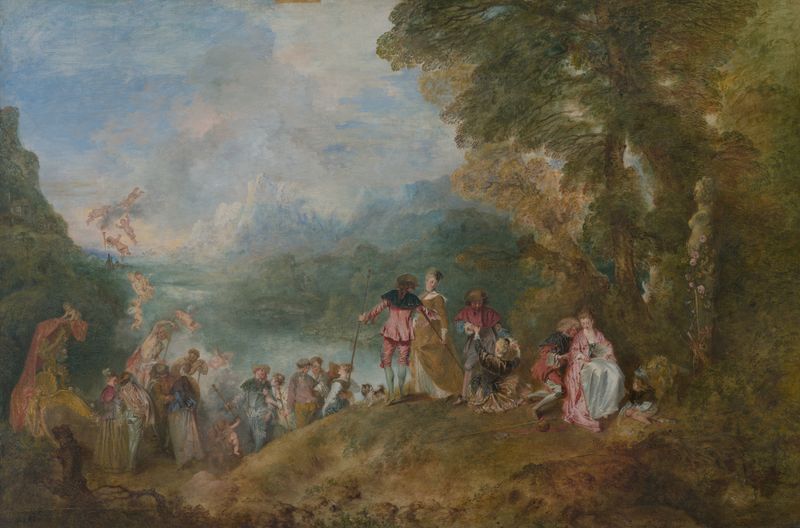
When did color learn to lie? The vibrant hues of nature might deceive, concealing the emptiness that lurks beneath the surface. Look to the cascading greens that blanket the hills; the lushness invites you in, yet there's an unsettling stillness that lingers. Notice how the figures of Bacchantes sway in their revelry, their movements almost ghostly against the vivid backdrop. The light dances across their forms, illuminating the joy that feels almost too vibrant, as if it tries to mask a deeper sorrow that permeates the landscape. Amidst the festivity, juxtaposition reveals itself; the Bacchantes’ abandon contrasts sharply with the muted tones of the background.
The idyllic scenery hints at vitality, yet it feels eerily isolated, as if echoing the void of human connection. Each brushstroke evokes a sense of fleeting joy, while the wealth of color serves as a façade, questioning what lies beneath the surface of our most exuberant moments. Moyses van Uyttenbroek created this striking piece during a period when Baroque art flourished, likely in the late 17th century. Emerging from the artistic milieu of the Southern Netherlands, he faced a world steeped in both vibrancy and turmoil.
The shift in artistic focus towards depicting everyday life and enriching narratives influenced him, as he sought to explore themes of elation intertwined with underlying melancholy in his work.