Landscape with Evening Sky — History & Facts
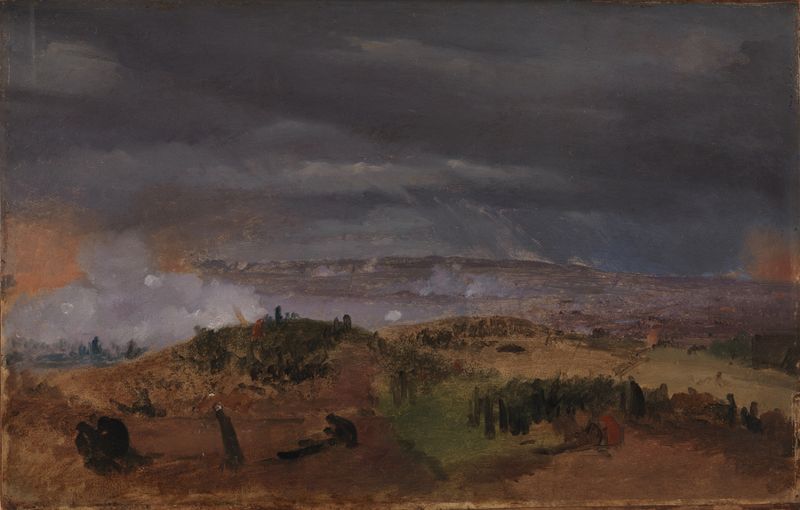
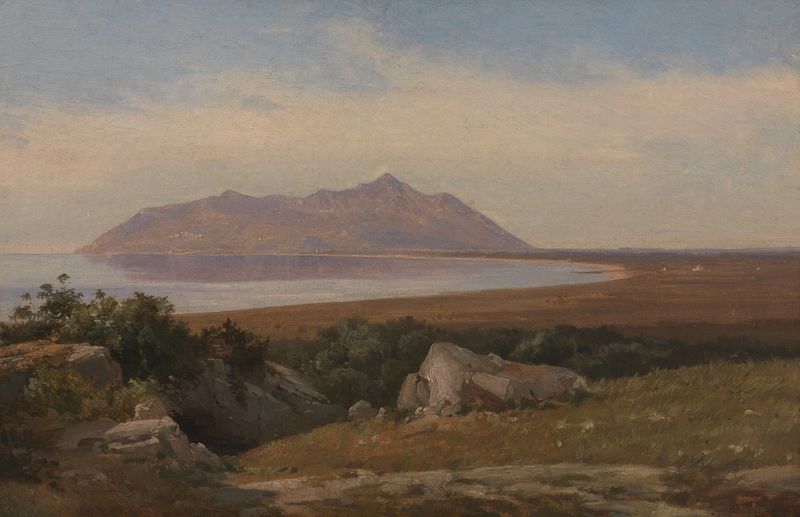
Can paint confess what words never could? In the delicate interplay of color and form, silent stories of loss whisper through the canvas. Look to the horizon where deep blues and muted purples converge, creating a twilight sky that feels both vast and intimate. The soft brushstrokes capture the fading light as it dances gently upon the distant hills, inviting your gaze to wander through the layered textures. Notice how the fading warmth of day transitions into the cool serenity of night, each hue revealing a palpable sense of melancholy and longing. Hidden among the seemingly tranquil tones are the poignant contrasts that evoke deeper emotions.
The juxtaposition of the vibrant sky against the shadowed land hints at a narrative of separation—perhaps a farewell to the sunlight that has slipped away. Each stroke carries a weight of nostalgia, a reminder of fleeting moments that linger just beyond reach, imbuing the landscape with an atmosphere that resonates with anyone who has felt the weight of absence. Jørgen Sonne created this piece before 1825, during a time when Romanticism was emerging in the art world, emphasizing emotional depth and individual experience. Living in Denmark, Sonne was influenced by the natural beauty surrounding him, as well as the turbulent changes within European art.
This period saw artists exploring intimate landscapes, reflecting the inner turmoil of their souls in the serene yet somber vistas they painted.