
Slaget ved Sehested — History & Facts
Who listens when art speaks of silence? In Slaget ved Sehested, hope emerges like a fragile bud amid the shadows of conflict, inviting viewers to pause and reflect on the weight of history. Look closely at the center of the canvas, where figures are locked in a tense standoff, their expressions a mix of determination and despair. The muted palette of browns and grays suggests a world stripped of vibrancy, yet hints of blue sky peep through the turmoil, offering a glimpse of potential. The composition draws the eye along the horizontal lines of the battlefield, while the contrasting light illuminating the figures creates a sense of drama that resonates deeply. Within this depiction lies a poignant narrative: the clash of ambition and consequence.
The soldiers, caught in the throes of battle, embody the universal struggle for purpose and belonging. Notably, the outstretched arms of a fallen figure suggest both surrender and a call for unity in the face of chaos. The juxtaposition of these elements crafts an emotional tension that lingers long after the initial viewing, posing questions about sacrifice and the hope for harmony that often accompanies such discord. Jørgen Sonne painted this work between 1821 and 1823, during a period when Denmark was grappling with the ramifications of the Napoleonic Wars.
As a rising artist, he sought to capture the complexities of human experience and national identity. The artwork reflects not only the historical significance of the battle it depicts but also Sonne’s desire to engage audiences with the profound emotional undercurrents of their shared history.
More Artworks by Jørgen Sonne
Browse all →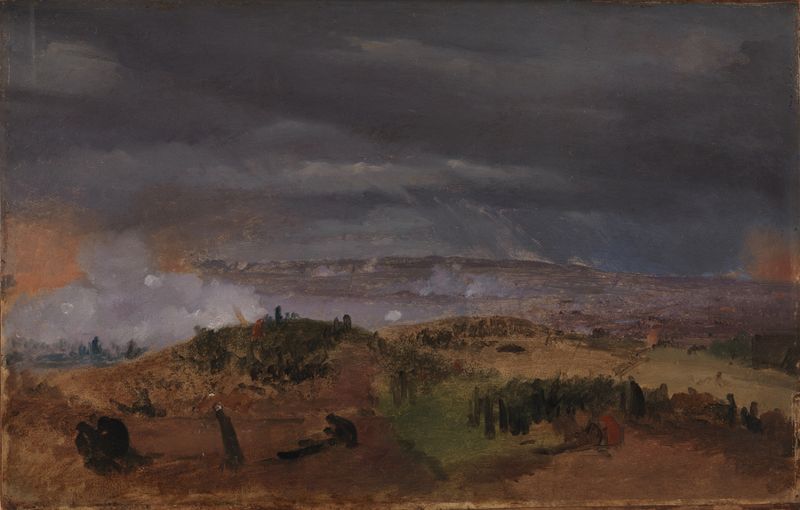
More Historical Art
Browse all →
The Night Watch Militia Company of District II under the Command of Captain Frans Banninck Cocq
Rembrandt van Rijn

Lincoln Memorial
Henry Bacon

The Third of May 1808
Francisco de Goya

Isaac and Rebecca, Known as ‘The Jewish Bride’
Rembrandt van Rijn

The Charge of the Mamelukes (1814)
Francisco de Goya

De vier ruiters van de apocalyps
Albrecht Dürer