Landscape with Figures and a Carriage — History & Facts
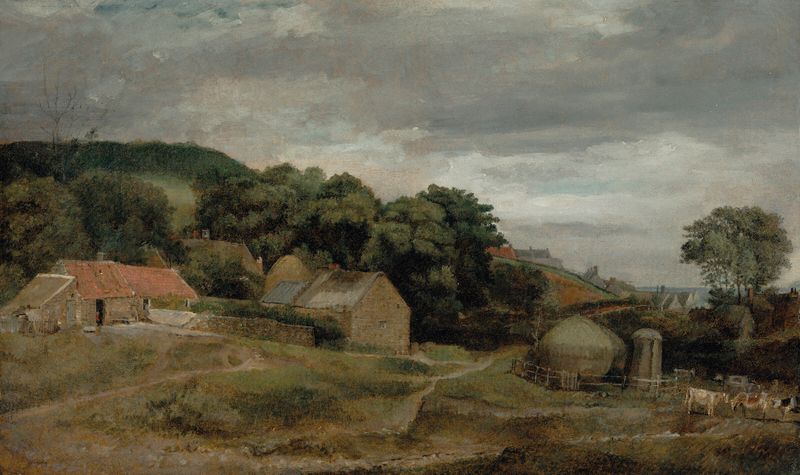
Who listens when art speaks of silence? In Sir David Wilkie's Landscape with Figures and a Carriage, destiny unfolds in a tranquil moment captured on canvas, inviting us to contemplate the essence of human presence within nature's embrace. Look to the foreground, where a carriage, poised to journey onward, stands as a metaphor for both movement and the stillness of choice. The figures nearby—two women and a gentleman—are rendered with delicate brushwork that conveys their quiet interaction amidst the expansive landscape. Notice how the soft, diffused light bathes the scene in warmth, highlighting the rich greens of the foliage and the subtle earth tones of the ground, creating a harmonious balance that draws the viewer's eye deeper into the composition. Delve into the interplay of figures and their surroundings; the distance between them evokes an emotional tension, suggesting unspoken thoughts and the weight of unfulfilled aspirations.
The carriage, both a vessel for travel and a symbol of stagnation, represents the duality of progress and pause—the choice to embark on the unknown or remain within the comforting familiarity of the present. The lush landscape surrounding them serves as both a backdrop and a silent witness to their contemplation of fate. Painted during a time when Wilkie was exploring the intricacies of genre scenes, Landscape with Figures and a Carriage emerges from a period of transition in the artist’s career, where he sought to bridge the gap between narrative and landscape painting. This work, created in the early 19th century, reflects an era captivated by romanticism and the interplay of nature and human existence, mirroring the artist's personal quest for meaning in the world around him.