Landscape with Figures and Carriage — History & Facts
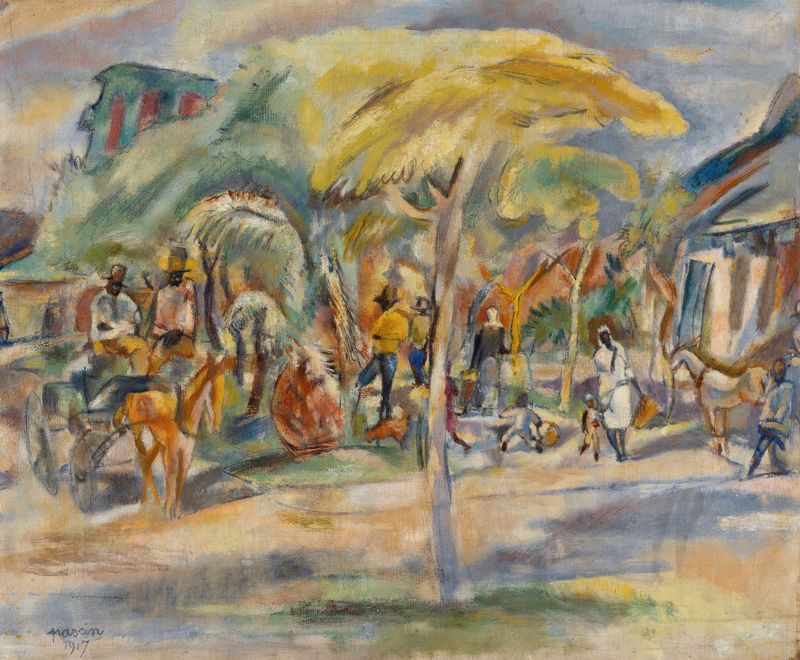
Did the painter know this moment would outlive them? In Landscape with Figures and Carriage, bound by the chaos of the early 20th century, a fleeting scene unfolds, echoing both serenity and madness. Focus on the left side of the canvas, where a carriage emerges against a backdrop of rolling hills, its earthy tones melding with soft blues and greens. Notice how the gentle brushstrokes create a sense of movement, as if the figures within the carriage are caught between stillness and the urgency of life. The light dapples through the trees, illuminating the faces of the figures, while shadows whisper secrets of the past. Yet, beneath the apparent tranquility, an emotional tension simmers.
The figures, seemingly at ease, are set against an expansive landscape that hints at isolation and the encroaching madness of the world beyond. The contrast between the vibrant greens of nature and the muted tones of the figures raises questions: are they escaping or merely pausing in a moment that ultimately cannot last? Every detail—an outstretched hand, a downcast gaze—reveals a deeper disquiet, as if the landscape holds both beauty and despair. In 1915, during his time in Paris, Jules Pascin was deeply influenced by the prevailing avant-garde movements and the tumult of World War I. This period marked a crossroads in his artistic journey, as he grapples with personal demons and societal upheaval.
The painting reflects not only the external world but also his internal struggles, embodying a moment frozen in time that resonates with the complexities of human experience.