Landscape with Flying Geese — History & Facts
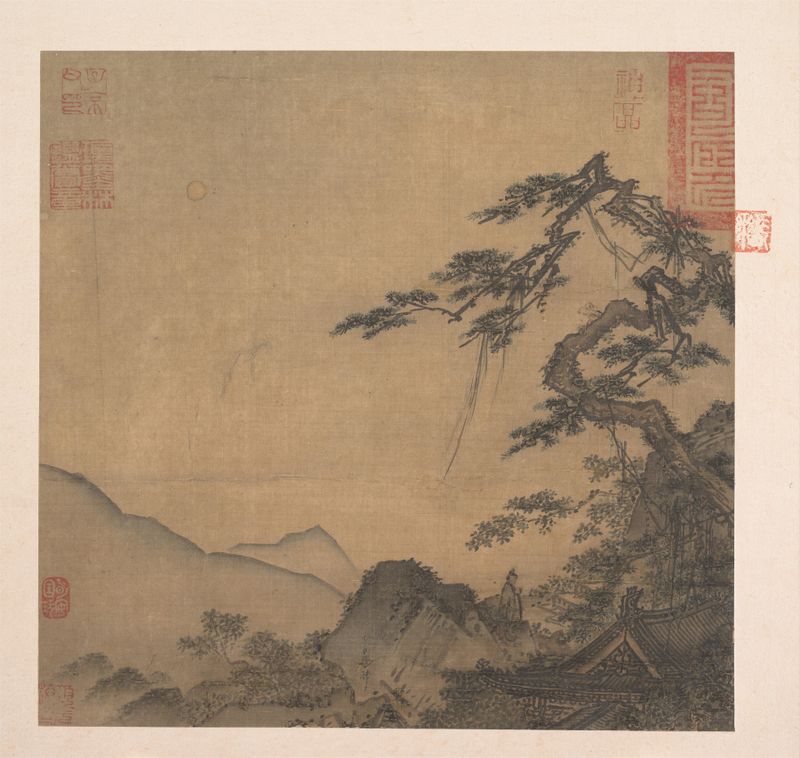
Where does light end, and longing begin? In Landscape with Flying Geese, the delicate brushstrokes evoke a world where innocence and nature intertwine, inviting the viewer into a serene harmony. Look to the left at the soft, undulating hills that cradle the scene, their gentle curves painted in muted greens and blues. Notice how the light cascades down from the horizon, illuminating the wispy clouds that seem to act as the bridge between earth and sky. The flock of geese, captured mid-flight, draws your gaze upward, their wings spread wide against the expansive backdrop.
This deft composition not only showcases Ma Lin’s skill but also creates a sense of movement, as if the very air vibrates with their passage. Delve deeper into the contrasts presented in this artwork—the juxtaposition of the grounded landscape with the ethereal flight of the geese speaks to a profound yearning for freedom. The calm stillness of the land contrasts sharply with the dynamic energy of the birds, reflecting a delicate tension between innocence and the outside world. Each element holds significance: the untouched earth evokes a sense of purity, while the geese symbolize the natural drive towards exploration and adventure. During the mid-1200s, Ma Lin painted this masterpiece at a time when the Song Dynasty was flourishing, marked by significant advancements in art and culture.
In a world beginning to embrace the principles of Zen and nature-focused philosophies, he sought to capture not just the physical landscape but the emotional landscapes of longing and serene beauty. This movement resonated deeply within the context of his life, enriching his work with layers of meaning that still resonate today.