Landscape with great pine — History & Facts
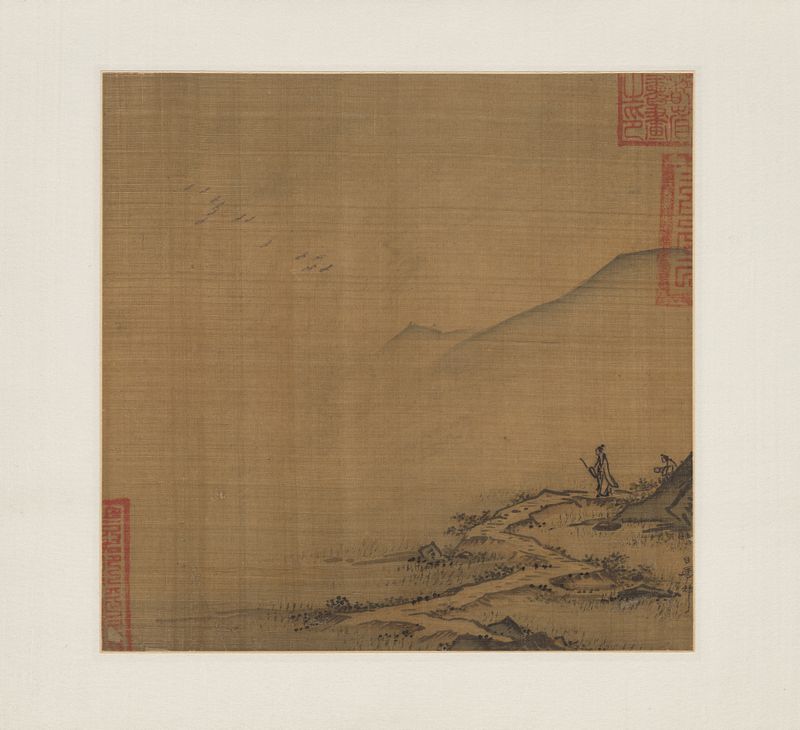
Can paint confess what words never could? In the stillness of Landscape with Great Pine, the essence of decay is whispering through the brushstrokes, inviting the viewer to contemplate the passage of time and the impermanence of life. Look to the left, where the great pine rises majestically, its gnarled branches stretching out like ancient hands reaching for the heavens. The muted greens and earthy browns blend seamlessly, creating a gradient of tones that evoke a sense of both warmth and melancholy. Notice how the gentle strokes of ink define the tree's texture, revealing its scars and knots; this is not merely a tree, but a testament to resilience amid decay.
The ink wash technique imbues the landscape with an ethereal quality, allowing light to wash over the scene and breathe life into the stillness. Delve deeper into the contrasts within the composition—the delicate balance between the flourishing foliage and the barren patches of earth. The pine symbolizes endurance, standing tall against the ravages of time, while the surrounding landscape hints at the inevitable cycles of growth and decay. This duality invites meditation on nature’s transient beauty, the way life flourishes only to fade, leaving behind echoes of what once was.
The artist captures this tension with intentional simplicity, urging the viewer to confront the fragility hidden within strength. Painted in the 13th century, the work emerged during a time of profound change in Chinese art, particularly within the Song dynasty. Ma Lin, who was influenced by the literati tradition, sought to elevate landscape painting as a form of personal expression and spiritual reflection. In a world grappling with upheaval, his depictions journey beyond mere representation, inviting onlookers to engage with the deeper narratives of existence and the natural world.