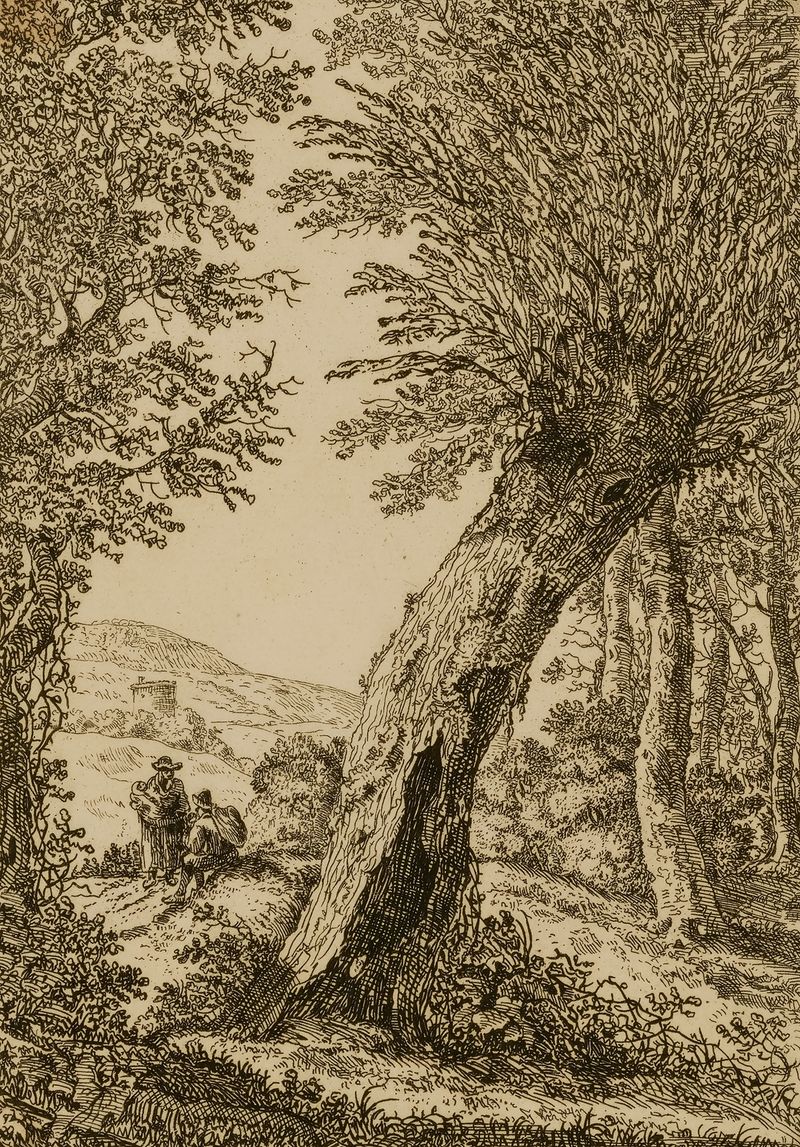
Landscape with Horsemen — History & Facts
What secret hides in the quiet of the canvas? In Landscape with Horsemen, the solitude of the landscape speaks volumes about loneliness and the human condition. Look to the center of the composition, where two horsemen ride through a vast expanse of terrain, their figures small against the sweeping horizon. Notice how the muted earth tones of ochre and green blend seamlessly to evoke a sense of desolation, while the sky, painted in gentle blues, seems to stretch infinitely above them. The horizon line is low, emphasizing the towering clouds above, which cast a soft light over the scene.
This technique illuminates the figures, enhancing their isolation amidst the sprawling landscape. The emotional tension lies in the juxtaposition of the horsemen against the vastness of nature. Their solitary presence suggests a journey, yet the openness around them hints at emptiness and introspection. The subtle brush strokes convey a sense of movement, yet they are also anchored by the stillness of the environment, embodying the idea that even in companionship, one can feel profound loneliness. Wilhelm von Bemmel painted this piece in the 17th century, a time when the Baroque movement was flourishing, emphasizing both grandeur and emotional depth.
Living in the Netherlands, he was influenced by the naturalistic style that characterized Dutch landscape painting. As Europe navigated political and social upheaval, his work reflects a deep understanding of solitude, capturing a moment that resonates throughout art history.