Landscape with Willow — History & Facts
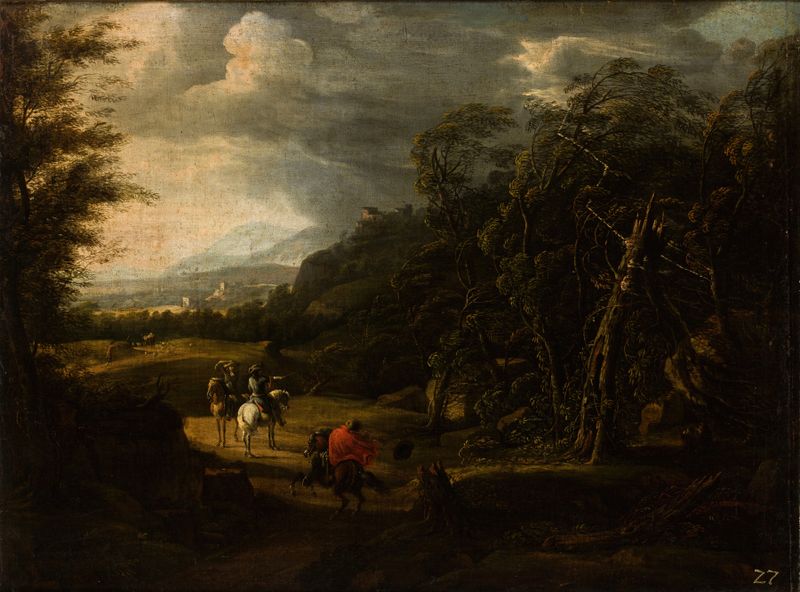
Could beauty survive in a century of chaos? This question lingers as one gazes upon the serene tranquility captured in the painting. A landscape unfolds, a harmonious blend of nature's elements that invites the viewer to ponder the fragility of peace amid turmoil. Look to the left where the willow tree sprawls gracefully, its arching branches draping over the water's edge. The artist’s brushstrokes capture the delicate interplay of light and shadow, with soft greens and muted blues creating an atmosphere of calm.
Notice how the gentle ripples in the water reflect the willow's form, blurring the line between reality and reflection, suggesting a deeper connection between the external world and internal emotions. In this scene, the willow symbolizes resilience, an emblem of beauty that persists despite testing circumstances. The tranquil water acts as a mirror, inviting introspection and highlighting the contrasting tumult of the world beyond the canvas. Here, the calmness of nature stands in stark opposition to the chaos that may surround it, embodying an obsession with preserving beauty against all odds. Created during an unknown period, the artist worked at a time when nature was often idealized.
Wilhelm von Bemmel, whose works explore themes of harmony and the sublime, likely drew inspiration from an era teetering on the brink of change. The landscape captures a moment of stillness, contrasting sharply with the socio-political disruptions of the time, reflecting a collective yearning for solace in a world rife with unrest.