Landscape with palace interior — History & Facts
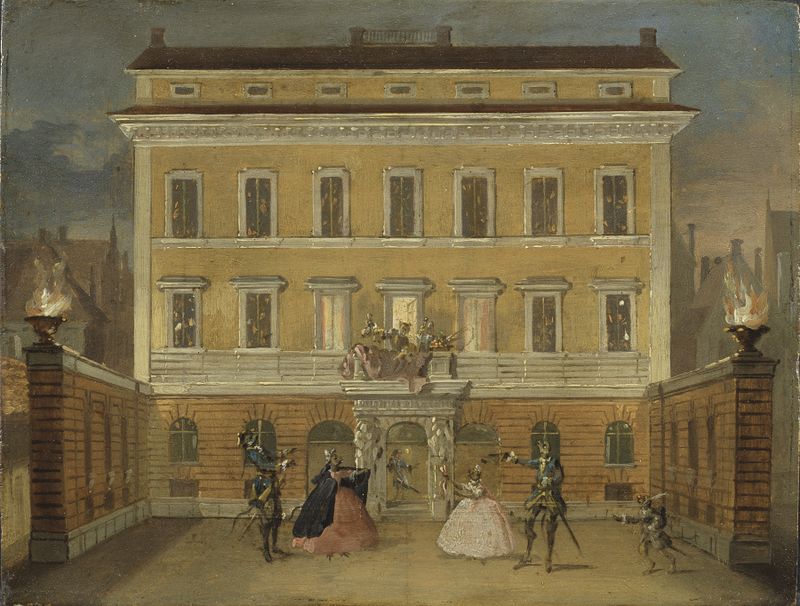
In the silence between brushstrokes, a profound emptiness resonates, inviting contemplation and introspection. Look to the center of the composition, where a grand interior unfolds with meticulous detail. The palace walls, adorned with opulent drapery, frame an expansive view that beckons the eye to explore the contrasting softness of fabric against the stark architecture. Warm hues coalesce with shadows, casting an ethereal glow that dances between the ornate decorations and the stillness of the space, allowing the viewer to feel the weight of history lingering in the air. Yet, it is the absence of figures that ignites a deeper emotional tension within the scene.
The emptiness speaks volumes; it’s a conversation between what has been and what remains. Each corner of this space, though rich in detail, echoes a loneliness, suggesting the ghosts of past occupants or the fleeting nature of grandeur. The meticulous craftsmanship of the elements invites admiration, yet the stillness evokes a longing for connection, wrestling with the juxtaposition of opulence and solitude. Johan Pasch the elder created this work during a time when the art world was shifting, grappling with the boundaries of realism and ornamentation.
Active in the 18th century in Sweden, he was influenced by the Rococo stylistic movements sweeping across Europe. This period of his life saw him balancing personal artistic expression with the demands of a society enamored with luxury, leading him to explore themes of emptiness and presence in the spaces he depicted.