Landscape with Stream — History & Facts
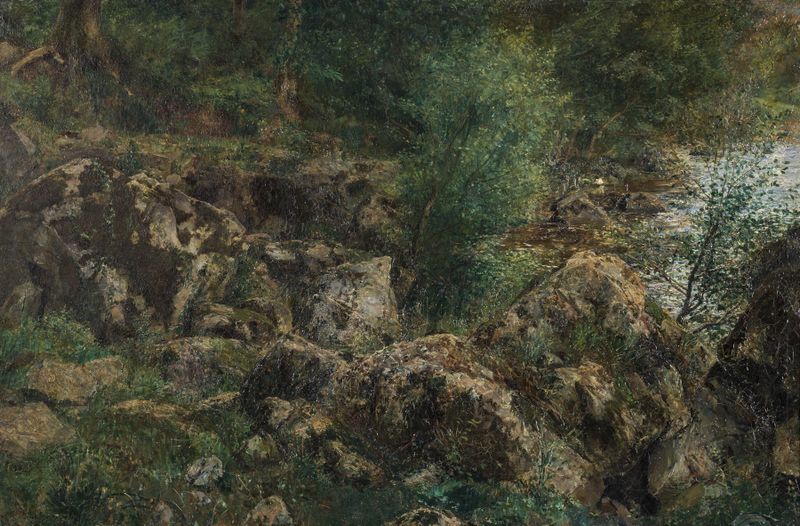
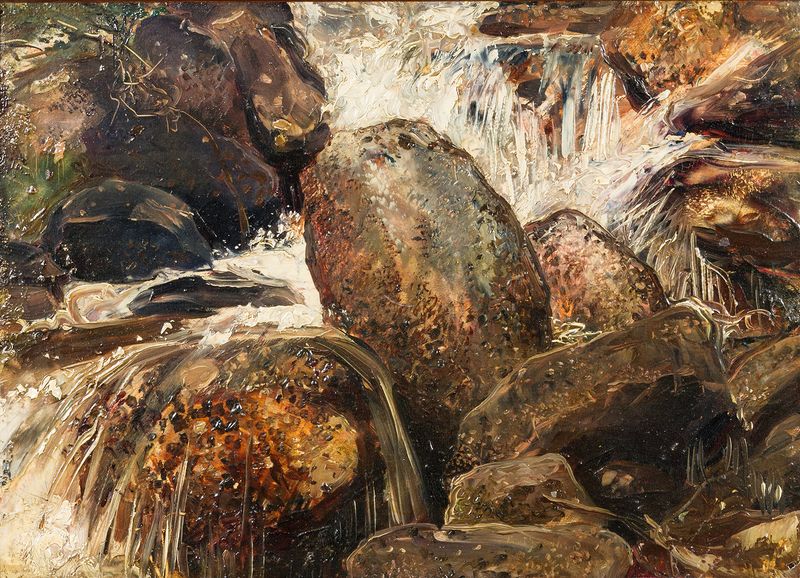
In this stark truth, the essence of the creative spirit unfolds—an obsession that transforms the mundane into the extraordinary. Look to the left where a gentle stream meanders, its crystalline waters capturing the soft, dappled light filtering through the trees. Notice how the artist’s brushstrokes breathe life into the foliage, with every leaf painted in vibrant greens, contrasting with deeper shadows that evoke a sense of mystery. The tranquility of the landscape is palpable, inviting you to delve into the quiet beauty of nature—a serene refuge untouched by human chaos. Yet beneath this calm exterior lies a tumult of emotions.
The juxtaposition of light and shadow suggests an internal struggle, a reflection of the artist’s own quest for meaning amid the tumult of existence. The water's flow represents both serenity and the passage of time, hinting at the transience of beauty and life itself. Small details, such as the distant hills barely visible beneath a mist, symbolize the elusive nature of obsession—the constant striving for something just out of reach. In 1884, Ernst Josephson painted this work during a period of intense personal and artistic exploration, amidst the shifting tides of the European art scene.
At that time, he was grappling with his identity as an artist, influenced by both the Romantic ideals and the emerging Impressionist movement. This landscape reflects his desire to capture the emotional depth of nature, a quest driven by his own obsessions and internal conflicts as he sought to reconcile beauty with the complexities of life.