Waterfall Study, Eggedal — History & Facts
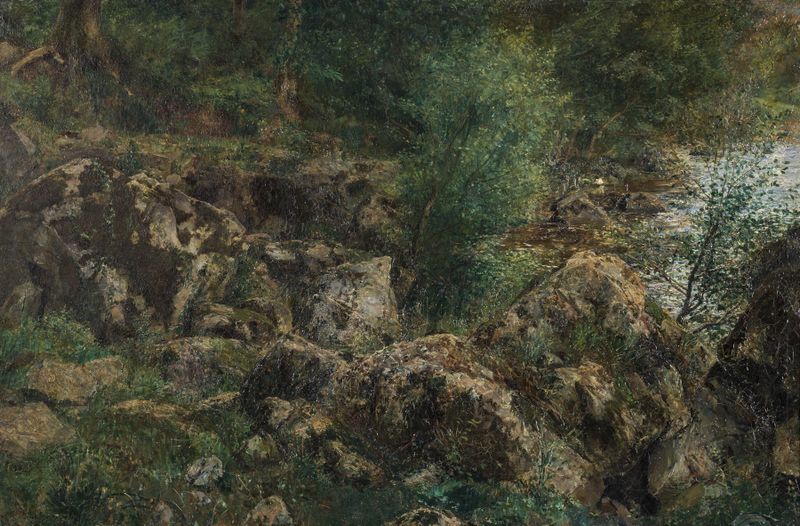
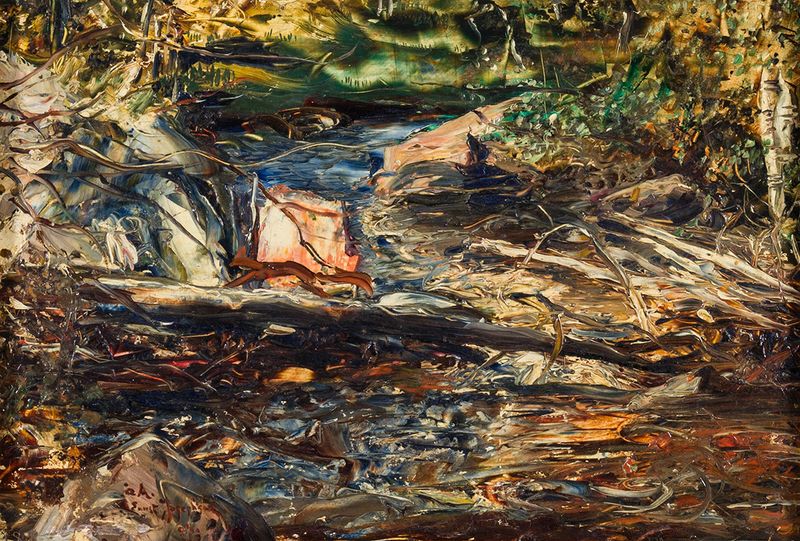
What secret hides in the quiet of the canvas? In the stillness of Waterfall Study, Eggedal, a profound sense of grief echoes, inviting the observer to contemplate the depths of emotion concealed within its tranquil beauty. Look to the center, where cascading water tumbles down the rocks, its rhythm captured in sweeping brushstrokes that convey both movement and stillness. Notice how the light dances subtly on the surface, illuminating the mist rising like whispers of lost moments. The palette is rich yet muted, with deep greens and soft grays that create a somber atmosphere, drawing attention to the delicate interplay between nature's force and the fragility of existence. In the intricate details, small hints of sorrow emerge—a fallen branch caught in the current, the dark shadows under the foliage that suggest secrets untold.
The waterfall becomes a metaphor for the passage of time, the relentless flow paralleling the artist's own struggles with loss. Each layer of paint is a testament to the complex relationship between beauty and melancholy, inviting reflection on personal experiences and universal truths. During the late 19th century, Josephson found himself deeply engaged in the exploration of color and emotion, painting Waterfall Study, Eggedal amidst a backdrop of shifting artistic movements in Sweden. This period was marked by a burgeoning interest in natural landscapes, yet for Josephson, it was infused with his own emotional turmoil, as he grappled with health issues and the weight of his artistic ambitions.