
Landscape with the Flight into Egypt — History & Facts
Is this a mirror — or a memory? In Landscape with the Flight into Egypt, the veil of time blurs, casting the viewer into a moment suspended between the terrestrial and the transcendent, a narrative ripe with profound significance. Look to the left at the sweeping hills that cradle the Holy Family, their journey a mere whisper against the grandeur of nature. Notice how the soft, pastel palette imbues the landscape with a sense of serenity, while the gentle brushstrokes create an ethereal quality that draws the eye toward the distant horizon. The towering trees frame the scene, visually guiding us to the figures of Mary, Joseph, and the infant Jesus, rendered with delicate attention, yet dwarfed by the sprawling vistas that seem to cradle their escape. What lies beneath the surface of this tranquil portrayal is a contrasting tension; the flight symbolizes both refuge and exile.
The expansive landscape, while beautiful, hints at the vulnerability of the Holy Family, their journey fraught with danger. The craggy mountains loom in the background—a reminder of the trials awaiting them, while the peaceful river meanders, suggesting the duality of life; perpetual movement amid uncertainty. Each detail adds layers to the narrative, inviting contemplation on the nature of faith and survival. In the years 1516-1517, during the height of the Northern Renaissance, Joachim Patinir was evolving his style amidst an art world captivated by humanism and naturalism.
Working in Antwerp, he infused his landscapes with both realism and spiritual depth, responding to the socio-political upheaval of the time. His art reflects a growing interest in depicting the interaction between mankind and the divine, demonstrating how landscapes could evoke a narrative power that transcended mere representation.
More Artworks by Joachim Patinir
Browse all →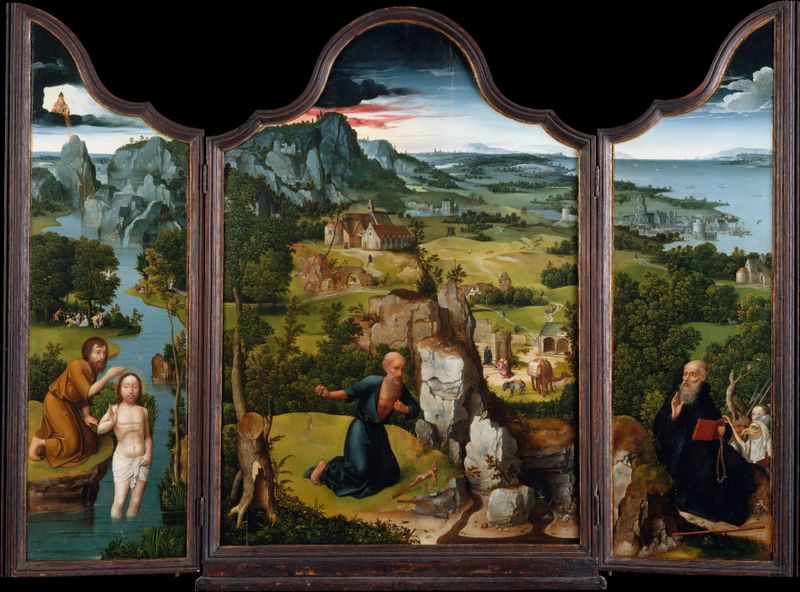
More Religious Art
Browse all →
The Return of the Prodigal Son
Rembrandt van Rijn

The Garden of Earthly Delights
El Bosco

Count Orgaz’ funeral
El Greco

The Hundred Guilder Print: the central piece with Christ preaching, the plate arched
Rembrandt van Rijn

The Descent from the Cross
Rogier van der Weyden

The return of the prodigal son
Rembrandt van Rijn