Paysage au bord du lac — History & Facts
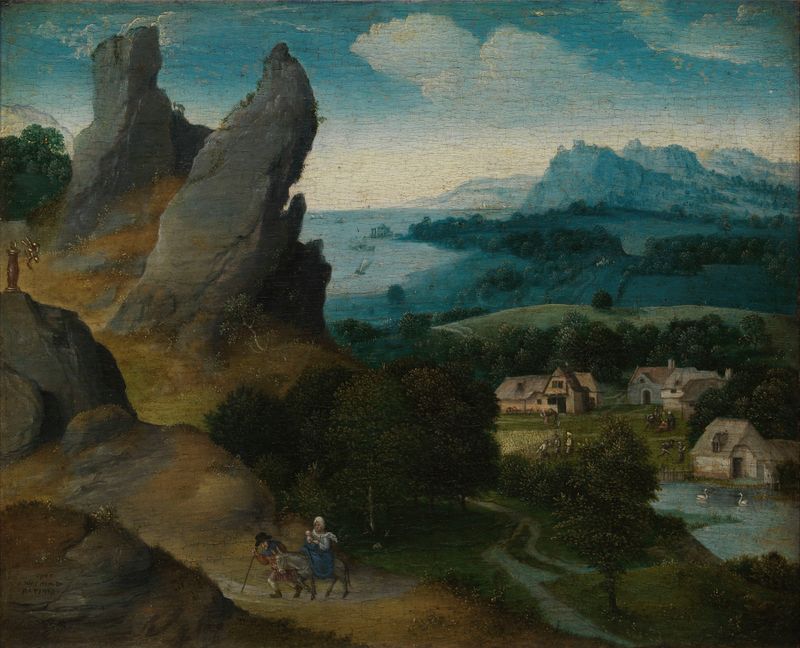
Did the painter know this moment would outlive them? In Paysage au bord du lac, vibrant strokes capture a world alive with movement, inviting viewers to step into a serene yet dynamic landscape. Focus on the shimmering water at the center of the composition, where light dances across its surface, reflecting both the sky's hues and the surrounding greenery. The natural elements, from the towering trees to the distant mountains, draw the eye outward, creating a sense of vastness. Notice how the carefully balanced colors evoke a harmonious interplay between tranquility and vitality, guiding the viewer through every crease of the earth and ripple of the lake. Delve deeper into the scene, and you'll uncover layers of significance.
The juxtaposition of the peaceful lakeside with the vibrant sky above suggests a dialogue between the calm of nature and the tempest of human existence. On the left, the small figures engaged in activity symbolize the transient nature of life, set against the eternal backdrop of the landscape. These details resonate with the beholder, evoking feelings of nostalgia and the passage of time. In the 16th century, Joachim Patinir was establishing his reputation as a leading landscape painter in the Northern Renaissance.
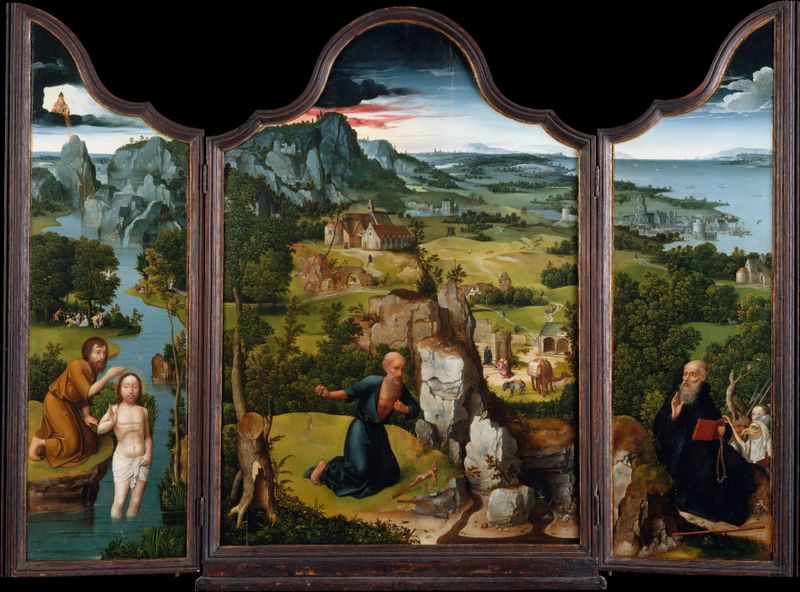
This period saw a growing appreciation for nature and the landscape genre, reflecting a shift in artistic focus from religious subjects to the beauty of the natural world. As Patinir painted, he was at the forefront of this movement, contributing to a legacy that would resonate in the art world for centuries to come.