
The Penitence of Saint Jerome — History & Facts
Can beauty exist without sorrow? In The Penitence of Saint Jerome, color becomes a profound vehicle for exploring the depths of human emotion, intertwining grace and regret. Look to the left at Saint Jerome himself, his figure draped in somber tones of earthy browns and muted greens, a stark contrast to the vibrant landscape unfolding behind him. The lush hills, painted in rich blues and greens, breathe life into the background, creating a dramatic skyline that embodies both tranquility and turmoil. Notice how the light highlights his furrowed brow, emphasizing the weight of his penance, while casting gentle shadows across the rocky terrain, suggesting the duality of his internal struggle. This artwork resonates with the juxtaposition of the saint's isolation amidst a flourishing world.
The delicate details—the open scroll, the skull at his feet—evoke contemplations of mortality and divine knowledge. The rich hues of the landscape around him juxtapose his earthy palette, presenting a stark reminder that beauty often flourishes in the shadow of sorrow and sacrifice. Each color choice deepens the emotional landscape, inviting viewers to explore their own reflections on penitence and redemption. In 1515, while working in Flanders, the artist was influenced by the burgeoning Renaissance and its focus on naturalism and human emotion.
Patinir was at the forefront of landscape painting, and during this period, he began to merge spiritual themes with expansive vistas. This synthesis of the celestial and the earthly marked a pivotal moment in his career, reflecting both personal and cultural shifts in the understanding of redemption and beauty through art.
More Artworks by Joachim Patinir
Browse all →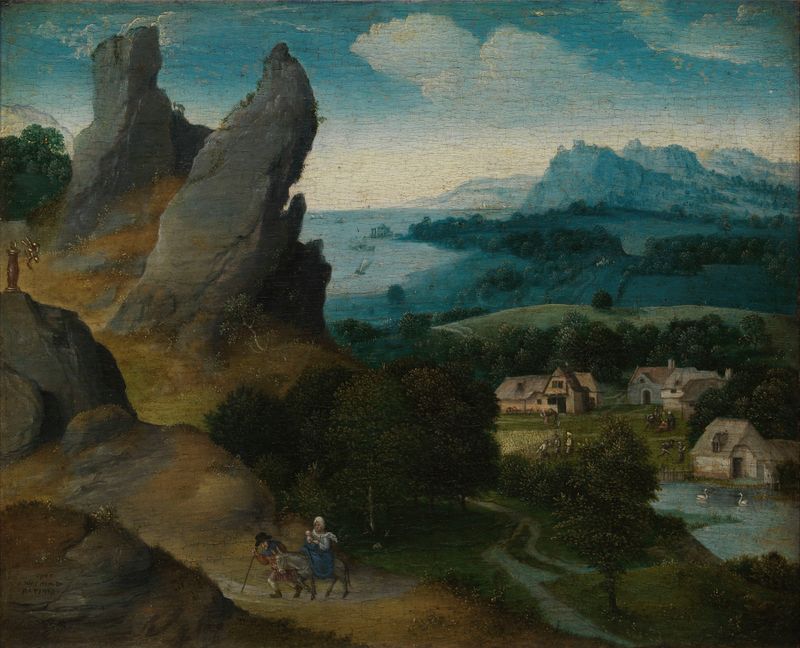
More Religious Art
Browse all →
The Return of the Prodigal Son
Rembrandt van Rijn

The Garden of Earthly Delights
El Bosco

Count Orgaz’ funeral
El Greco

The Hundred Guilder Print: the central piece with Christ preaching, the plate arched
Rembrandt van Rijn

The Descent from the Cross
Rogier van der Weyden

The return of the prodigal son
Rembrandt van Rijn