Landscape with Trees and a Figure — History & Facts
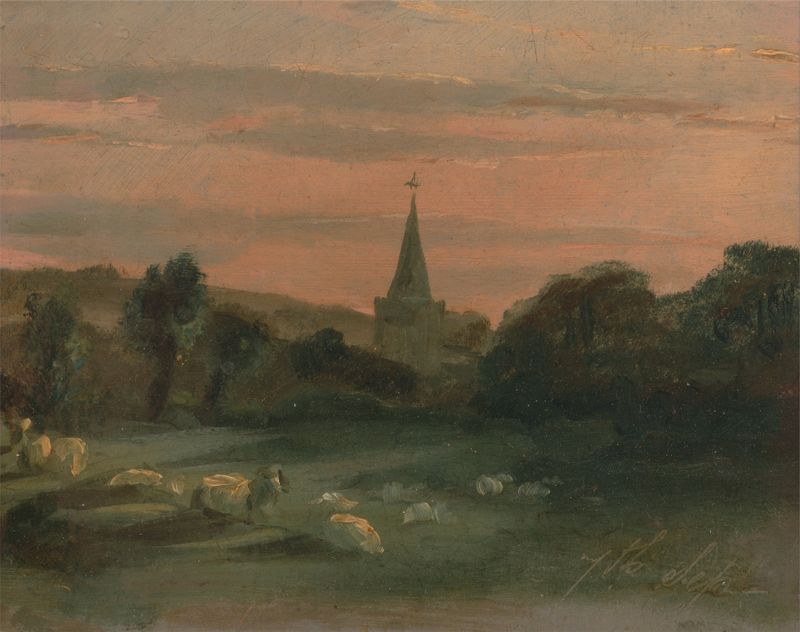
In its silent patience, it holds the weight of a lingering absence, echoing the ache of unexpressed grief. Look to the center of the composition, where a solitary figure stands amidst a forest of trees. The muted greens and browns create a sense of stillness, drawing the eye to the subtle interplay of light filtering through the leaves. Notice how the figure, though small against the towering trunks, is grounded in this tranquil space, embodying both isolation and introspection.
The brushstrokes suggest a delicate texture, making the foliage almost breathe around them. The arrangement of the trees frames the figure, creating a cocoon that simultaneously offers solace and emphasizes solitude. Each trunk appears to whisper secrets of loss, their sturdy presence in contrast to the vulnerability of the human form. This juxtaposition of strength and fragility reveals layers of emotion, allowing the viewer to ponder the universal experience of sorrow, the quiet companionship of nature in moments of mourning. Thomas Churchyard painted this piece during a time when he was navigating the complexities of life as an artist.
Working in England during the late 19th century, he was influenced by the romantic tradition of landscape painting that sought to capture both beauty and melancholy. This work reflects not just a mastery of technique but also a deep personal response to the human condition, a contemplative exploration of grief that resonates through the ages.