Landschaft — History & Facts
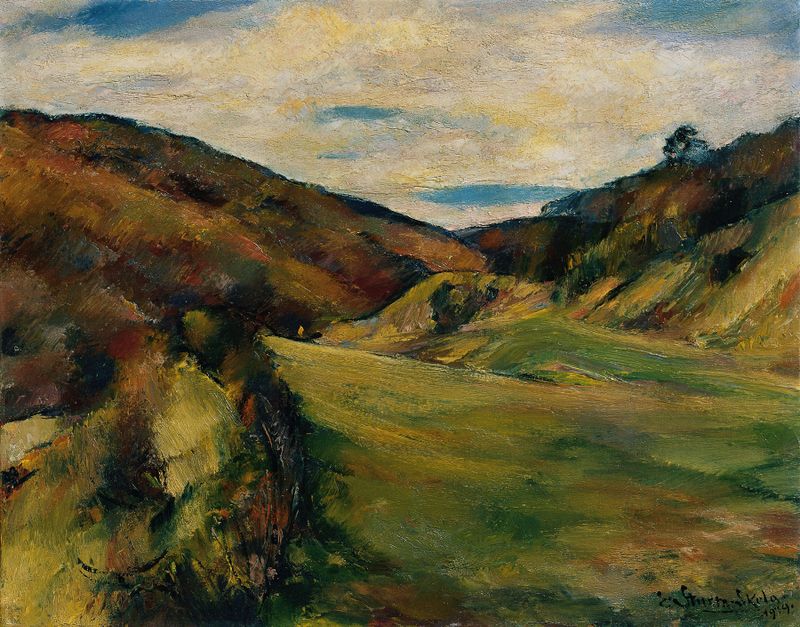
Within Landschaft, the rhythm of nature pulses through the canvas, inviting the viewer to breathe in the essence of ecstasy. The vibrant hues and sweeping forms evoke a landscape alive with possibility, each detail whispering secrets of the earth's intimate connection with the human experience. Look to the horizon where the sky meets the undulating hills, a brilliant crescendo of blues and greens. The artist employs bold, sweeping strokes that dance across the surface, guiding your eyes from the bright sunlit foreground to the shadowy depths behind.
Notice how the lighter areas draw the viewer in, luring you to explore the intricate textures and layered colors that create a sense of movement and depth. This composition, alive with energy, feels as if it is flourishing beyond the confines of the canvas. Delve deeper and you'll discover the tension between the vibrant colors and the darker undertones that suggest an underlying urgency. The juxtaposition of swirling energetic brushwork and more tranquil spaces creates a dialogue between chaos and serenity, reflecting the duality of the human spirit.
It is as if the landscape embodies moments of joy intertwined with the melancholy of existence, holding within it the secrets of both ecstasy and longing. In 1927, Egge Sturm-Skrla painted Landschaft during a transformative period for modern art, rooted in the post-World War I context. Living in Germany, the artist was influenced by the burgeoning expressionist movement, which sought to convey emotional experiences rather than mere representations of reality. This was a time of exploration and experimentation in his career, as he sought to forge a personal identity through his work while grappling with the societal upheaval around him.