
Landschaft an der Amalfiküste — History & Facts
In the interplay of nature’s splendor, loss often lingers beneath the surface, waiting to be unveiled. Look to the left at the undulating hills, where rich greens intertwine with the delicate blues of the sea. The light dances over the landscape, illuminating the rocky cliffs that rise majestically against a vivid sky. Flamm’s brushwork captures the texture of foliage and stone with a tenderness that evokes both warmth and melancholy.
Each stroke invites the eye to journey through the scene, revealing a harmony that feels both inviting and bittersweet. Notice the contrast between the serenity of the coastline and the tumultuous waves crashing at its base. This juxtaposition embodies the duality of beauty and the heartache it can conceal, suggesting a deeper narrative of longing and remembrance. Small details, such as the way the light glints off the water or the shadowed crevices of the cliffs, hint at the fragility of this idyllic moment, reminding us that such splendor can be fleeting. In the late 1860s, as Flamm painted this piece in Germany, he was at the intersection of Romanticism and emerging Impressionism.
It was a time when artists began to explore emotional landscapes, reflecting personal experiences and broader social changes. The peaceful yet poignant essence of this work encapsulates the artist's own grappling with themes of beauty, loss, and the transient nature of life, resonating with an audience yearning for depth beyond mere aesthetics.
More Artworks by Albert Flamm
Browse all →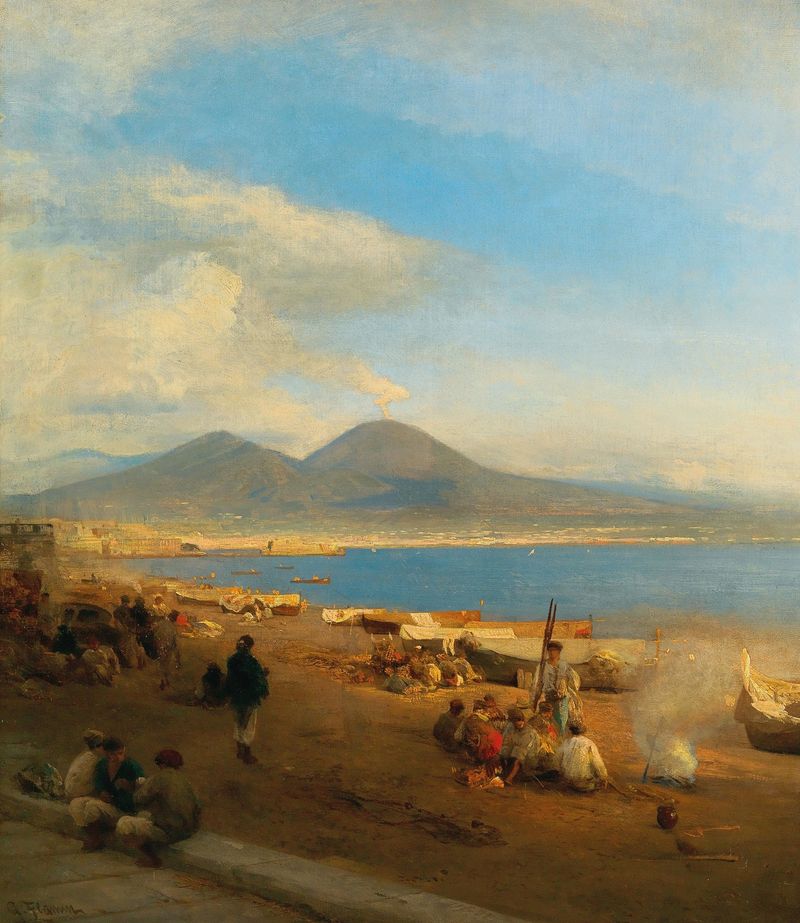
A view of the Gulf of Naples from Posilippo
Albert Flamm
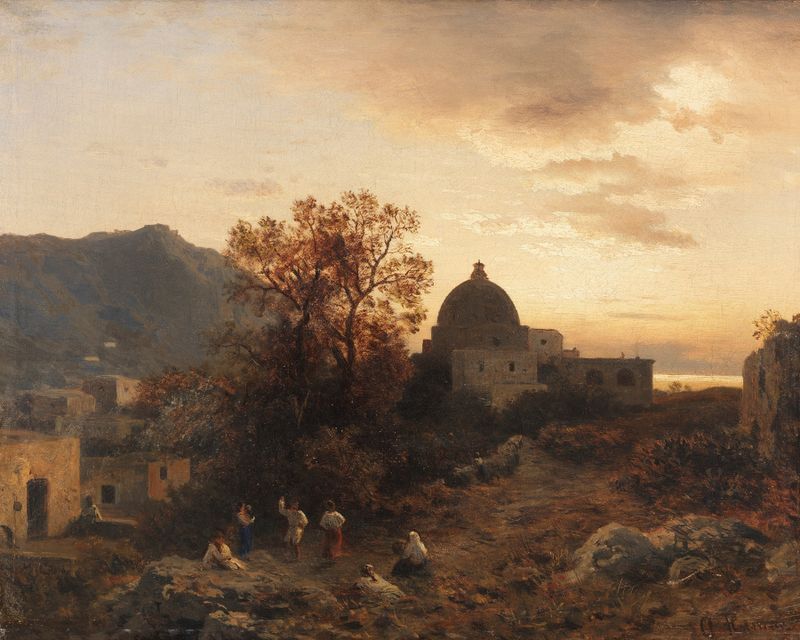
Abendstimmung an der italienischen Küste mit tanzenden Figuren
Albert Flamm
A View Of The Gulf Of Naples From Posilippo
Albert Flamm

Abendstimmung am Rhein
Albert Flamm

Badende Frauen am Golf von Neapel
Albert Flamm
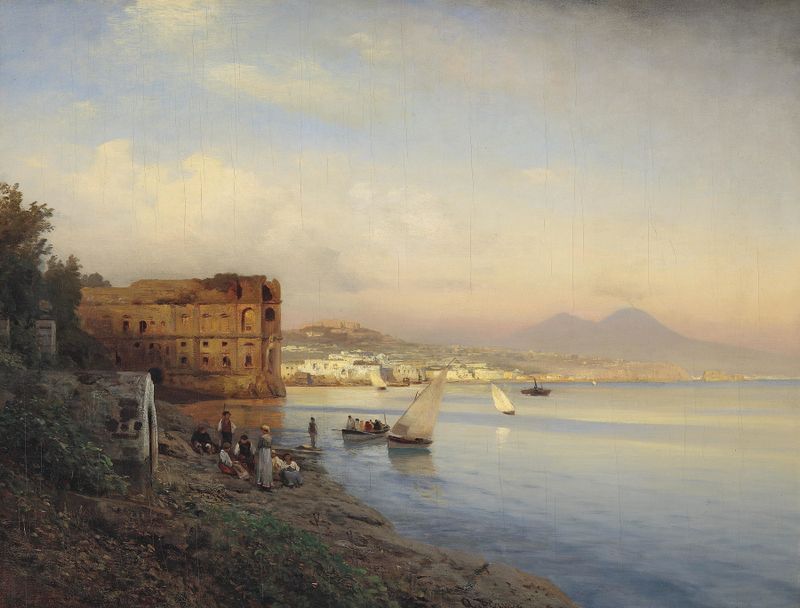
Blick auf die Bucht von Neapel
Albert Flamm

Crab Fishermen On The Beach
Albert Flamm
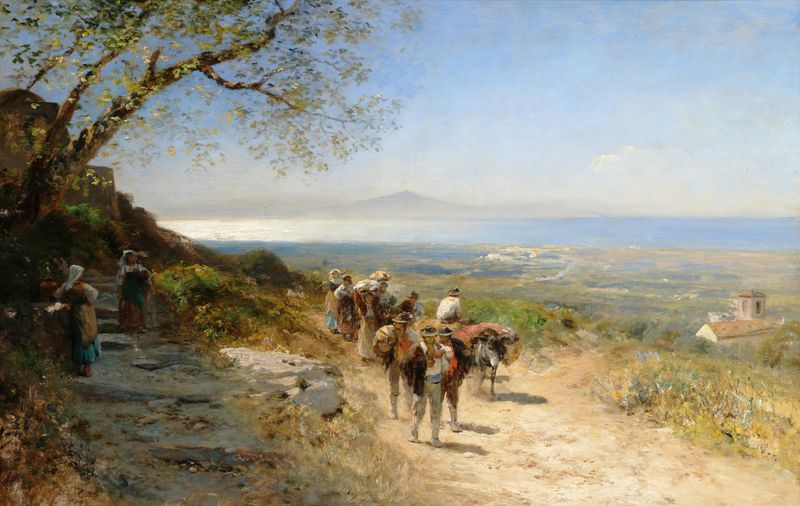
Homecoming of the Field Workers
Albert Flamm
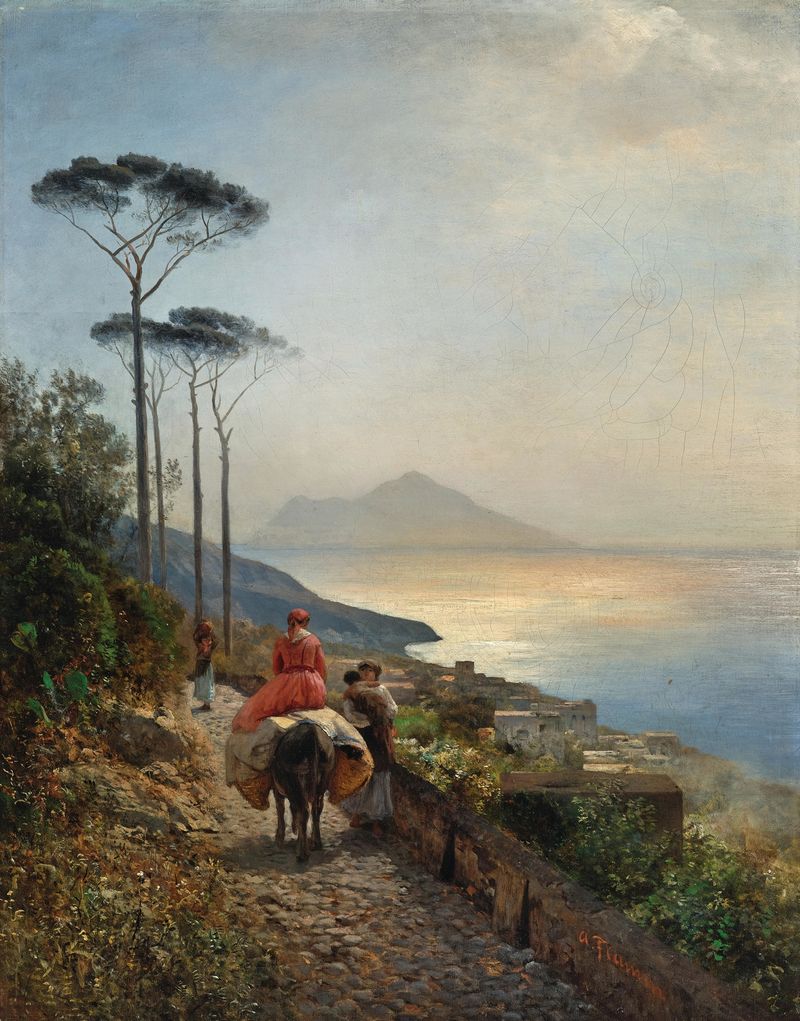
Sunset at the Bay of Naples
Albert Flamm
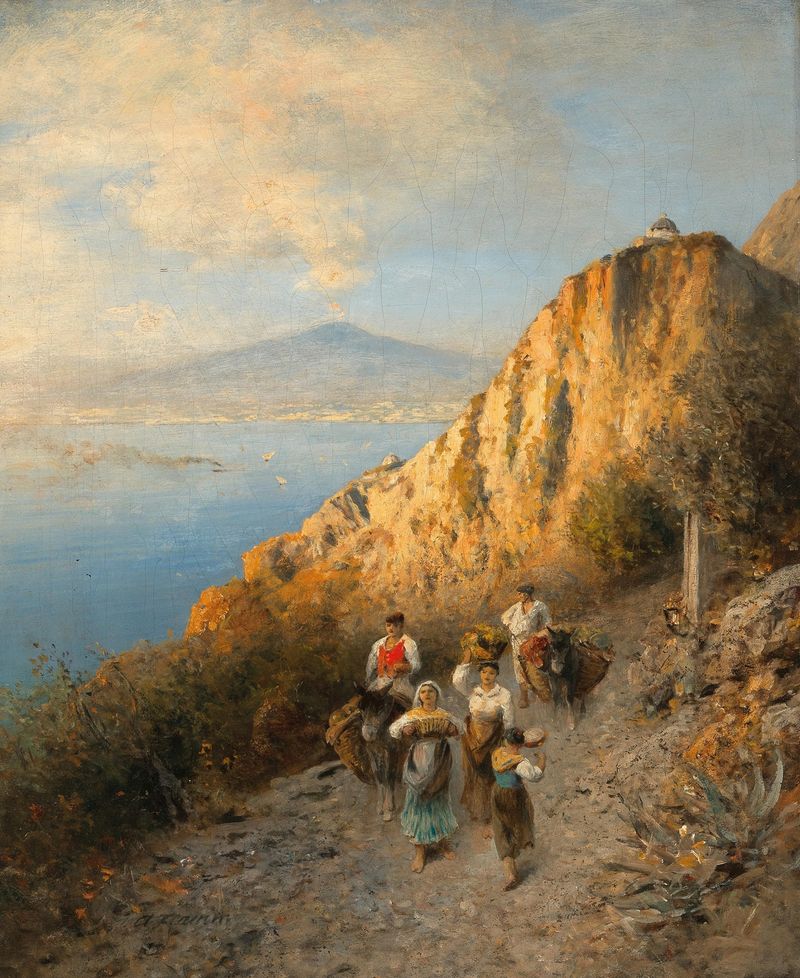
Returning Home from the Market, with Vesuvius in the Background
Albert Flamm





