
Landschaft bei Murnau — History & Facts
What if beauty was never meant to be finished? In Landschaft bei Murnau, the play of light and shadow invites us into a world that feels both familiar and elusive, suggesting that perfection lies in the incomplete. Look to the left at the interplay of shadows cast by the dense trees, their dark forms contrasting with the vibrant greens of the foliage. The brushwork varies from soft, fluid strokes in the sky to sharp, defined lines along the earth, guiding your gaze through the landscape. A spectrum of colors, from deep emerald to bright yellow, creates a harmonious atmosphere that feels alive, throbbing with the pulse of nature.
The composition draws you into an idyllic moment, where the landscape appears suspended in time. Yet, hidden within the serenity is a tension that evokes the transient nature of beauty. The lushness of the trees and the delicate ripples of the stream seem to whisper of life’s ephemerality, while the shadows hint at the darker truths that often accompany such splendor. This subtle contrast between light and shadow evokes a sense of longing, a reminder that beauty may always exist just out of reach, shaped by the passing of time. In the late 1860s, when this piece was created, the artist was immersed in the burgeoning Romantic landscape movement, seeking to capture nature's sublime essence.
Lier, living in Germany, was influenced by his contemporaries who emphasized emotive landscapes that resonated with personal experiences and reflections. This period marked a significant evolution in art, as artists began to explore not just the physical world, but the emotional landscapes within themselves and their viewers.
More Artworks by Adolf Heinrich Lier
Browse all →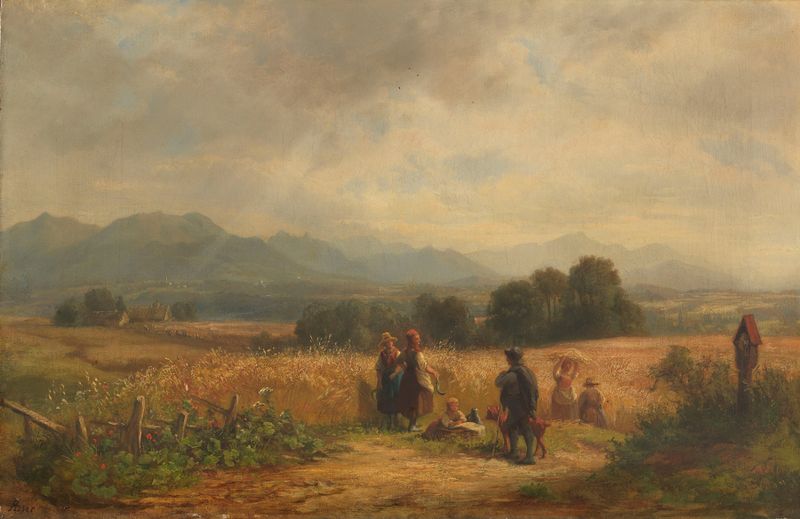
Erntetag in Oberbayern bei Habach
Adolf Heinrich Lier

Waldinneres
Adolf Heinrich Lier
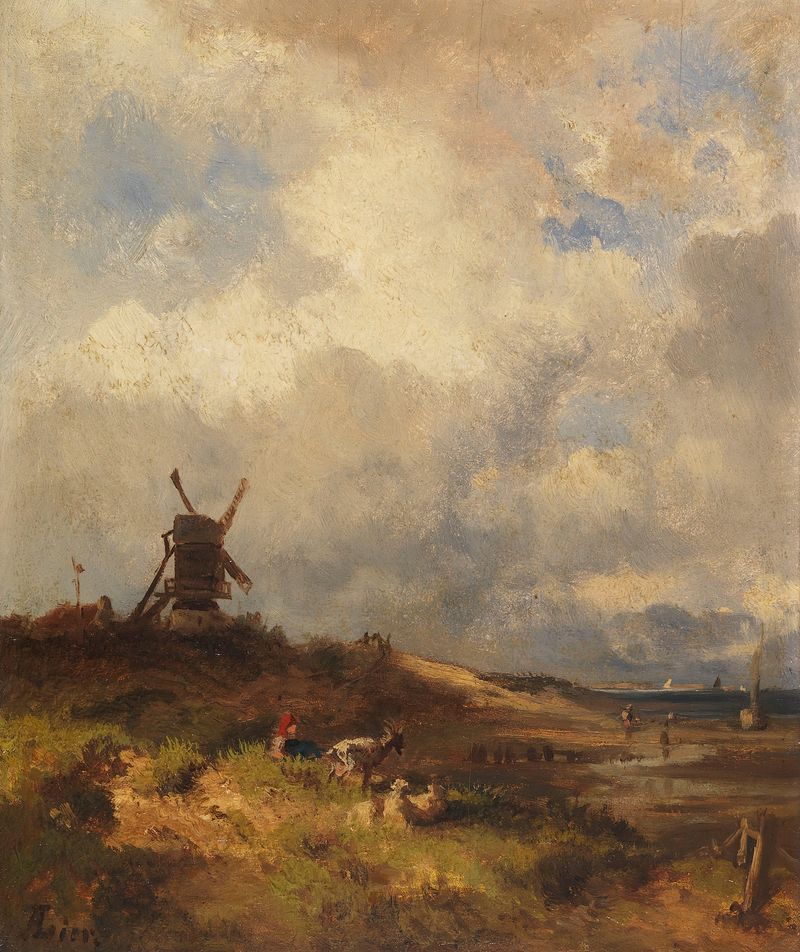
Küstenlandschaft mit Windmühle
Adolf Heinrich Lier

Grain Harvest in the Mountain
Adolf Heinrich Lier

Fischer am Seeufer
Adolf Heinrich Lier

Herbstlandschaft am Abend mit heimkehrender Schafherde
Adolf Heinrich Lier
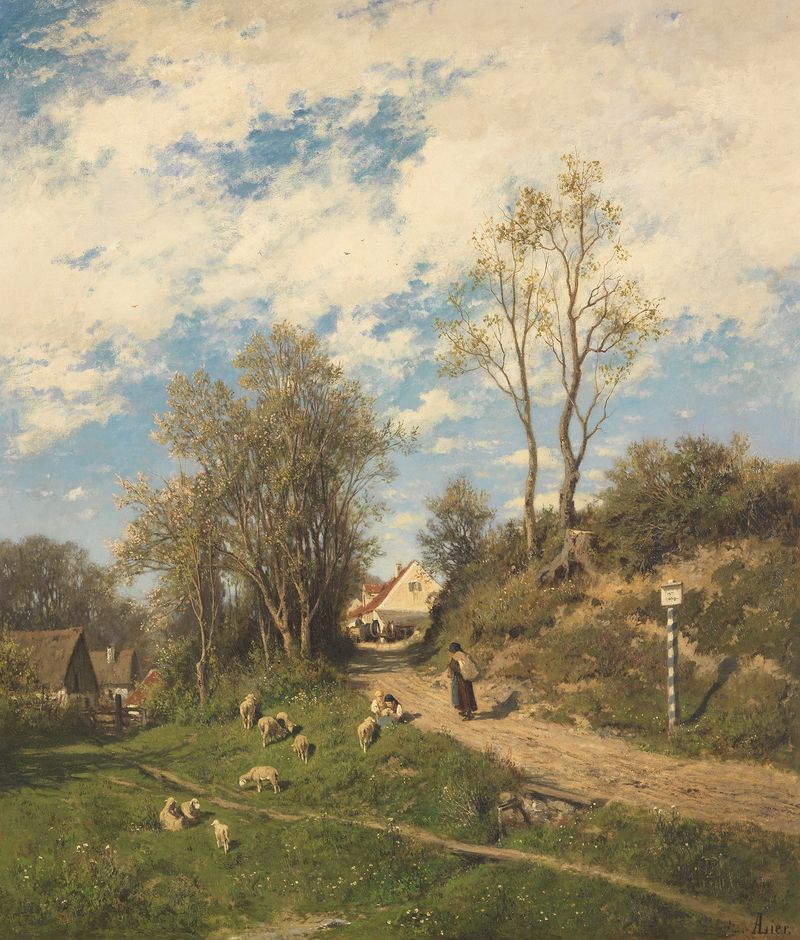
Frühlingsmorgen
Adolf Heinrich Lier

Eiche am Waldrand und pflügender Bauer
Adolf Heinrich Lier
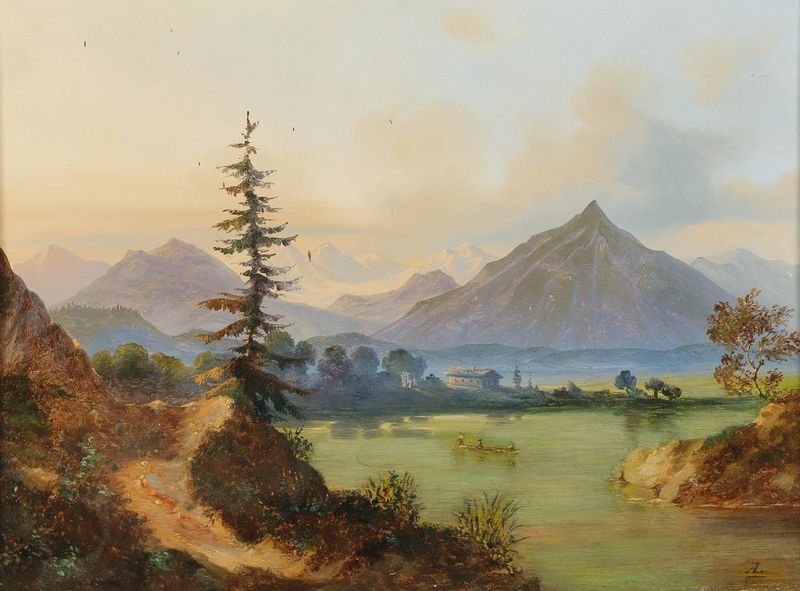
Lake In A Mountain Landscape
Adolf Heinrich Lier

Heimkehr der Landleute am Abend bei Pang III
Adolf Heinrich Lier





