Landschaft im Wienerwald — History & Facts
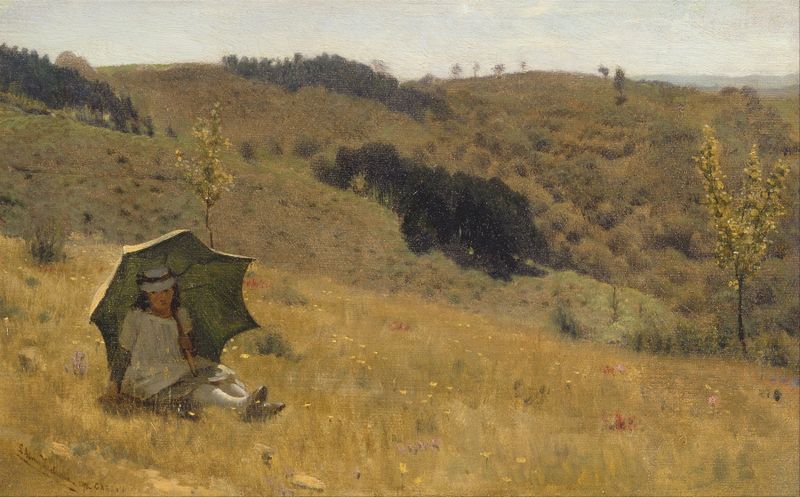
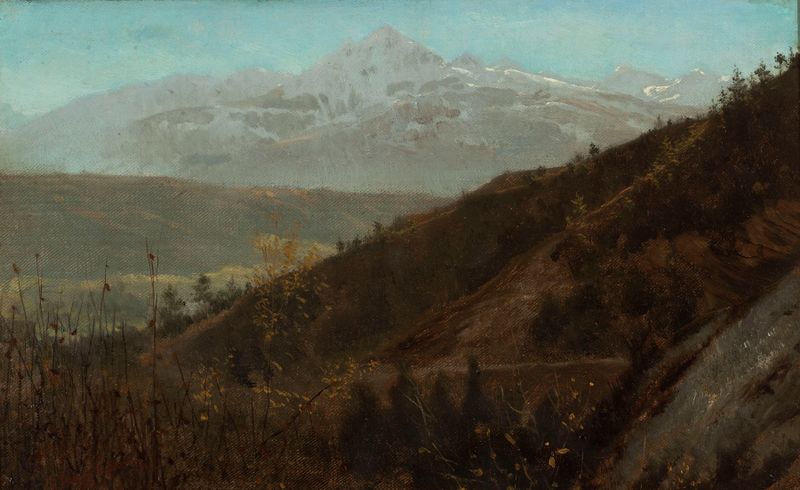
Where does light end, and longing begin? In Landschaft im Wienerwald, the boundaries dissolve, inviting an exploration of nostalgia and emotion through the interplay of nature and human experience. Look to the left at the delicate interplay of sunlight filtering through the leaves, dappling the forest floor in a dance of warmth and shadow. The lush greens and earthy browns create an enveloping atmosphere, while a solitary figure stands at the edge of the path, contemplating the depth of the trees. The painter's meticulous brushwork captures the softness of the foliage and the gentle contours of the landscape, evoking a sense of tranquil isolation that resonates deeply within the viewer. As you absorb the scene, consider the figure's posture—slightly bent, as if weighed down by thoughts of a quiet sorrow.
The contrast between the vibrant life of the forest and the solitude of the character presents a dialogue between joy and melancholy, accentuating a yearning for connection with both the natural world and within oneself. This emotional landscape becomes a reflection of our own inner landscapes, where beauty and sadness coexist. Lawrence Alma-Tadema painted Landschaft im Wienerwald in 1900 during a period of transition in the art world. Living in London, he was influenced by the Pre-Raphaelite movement and the burgeoning interest in naturalism.
At the same time, he was navigating personal changes, which perhaps fueled the emotional depth present in this work, allowing him to capture the dualities of life with a striking visual poignancy.