Sunny Days — History & Facts
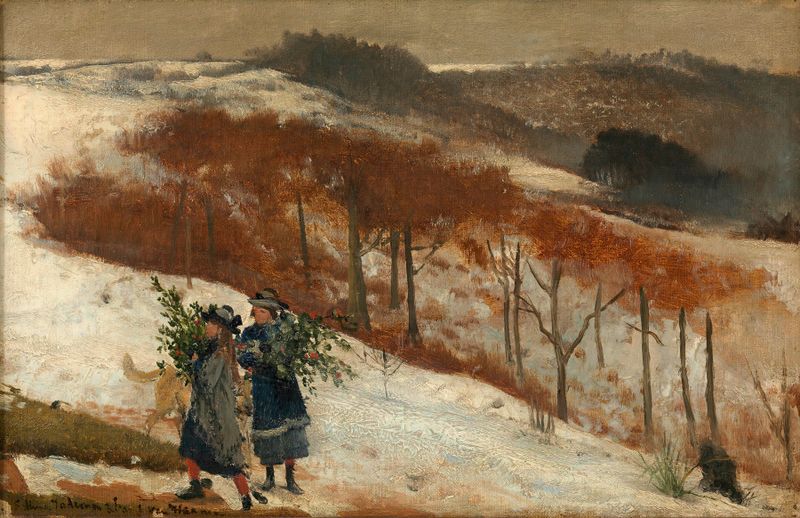
Could beauty survive in a century of chaos? In a world teetering on the brink, the fragile moments of joy become all the more precious, inviting reflection on their ephemerality. Focus first on the exquisite interplay of light and shadow that dances across the sunlit figures. The warm golden hues envelop the scene, inviting you to immerse yourself in the radiant warmth of the painted atmosphere. The artist employs delicate brushwork to capture the intricate details of the figures' attire, rendering the fabric with a sense of tangible texture.
Notice how the light falls upon the luminous faces, reflecting a moment of serene bliss amid a timeless landscape. As you delve deeper into the piece, consider the contrasting elements at play — the carefree joy of the figures versus the broader context of an era marked by turmoil. The garden setting, lush and vibrant, symbolizes both abundance and transience, suggesting that such moments, while fleeting, are vital to the human experience. The figures' expressions convey a mix of innocence and longing, hinting at a deeper narrative beneath the surface — a desire for connection in a world where chaos looms. This artwork emerged during a pivotal period in the artist’s life, likely painted in the late 19th century when he was settled in England, having left his native Netherlands.
The art world was witnessing an embrace of classicism and beauty, yet also grappling with the upheavals of modernity. Alma-Tadema was deeply influenced by classical themes, and in Sunny Days, he skillfully encapsulates a moment of joy that stands resilient against the uncertainties of the time.