Landschaft mit Überfall — History & Facts
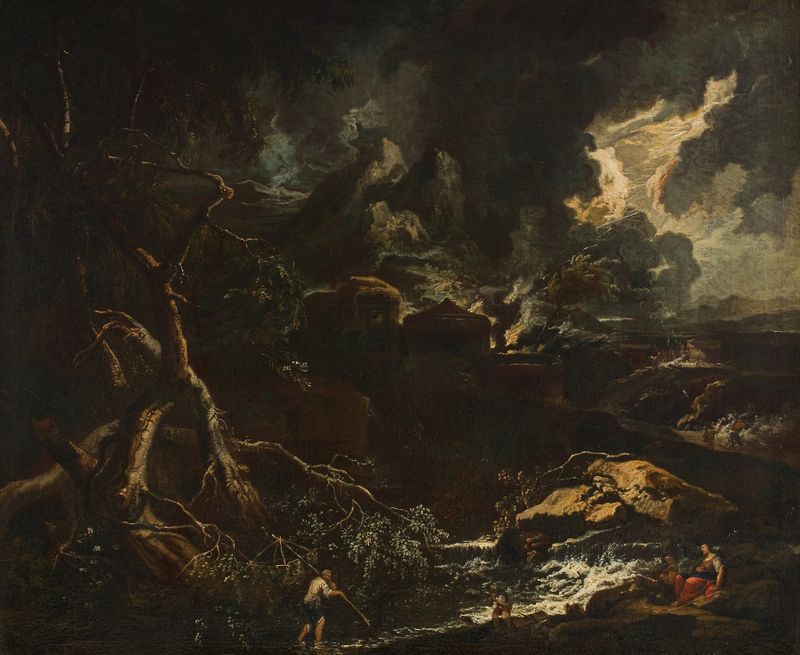
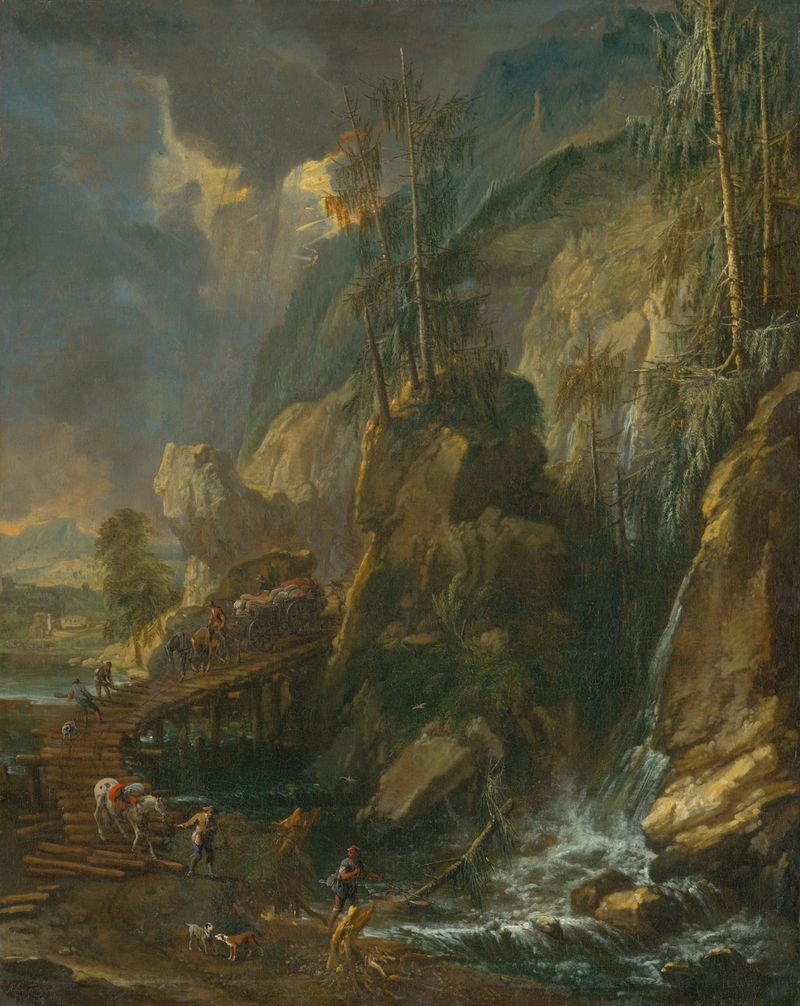
Could beauty survive in a century of chaos? Look to the left of the canvas, where a serene landscape unfolds, bathed in the soft hues of fading daylight. The gentle curves of the hills invite the eye, leading us toward the horizon that seems to swallow the last remnants of sun. Notice how the artist captures the interplay of light and shadow, where the warm glow contrasts sharply with the encroaching darkness on the right.
This delicate balance creates a quiet tension, hinting at the turmoil just beyond this idyllic scene. As you explore further, observe the figures emerging from the trees, their postures tense, as if caught in a moment of impending conflict. The muted colors of their garments blend harmoniously with the rich earth tones surrounding them, emphasizing their vulnerability against the vibrant landscape. The juxtaposition of beauty and dread reflects a profound melancholy, inviting questions about the fragility of peace amidst the chaos of human existence.
Each small detail, from the leaves rustling in the breeze to the distant mountains, contributes to a narrative steeped in quiet foreboding. Created in 1700 during a time when Europe was grappling with political upheaval and social unrest, the piece stands as a contemplative reflection on the time. Anton Faistenberger was immersed in the Baroque tradition, yet he sought to evoke a sensation that transcended the aesthetics of his era. As art began to reflect the complexities of human emotion, this work encapsulates the conflict between tranquility and turmoil, embodying the spirit of a world on the brink of change.