Gewitterlandschaft — History & Facts
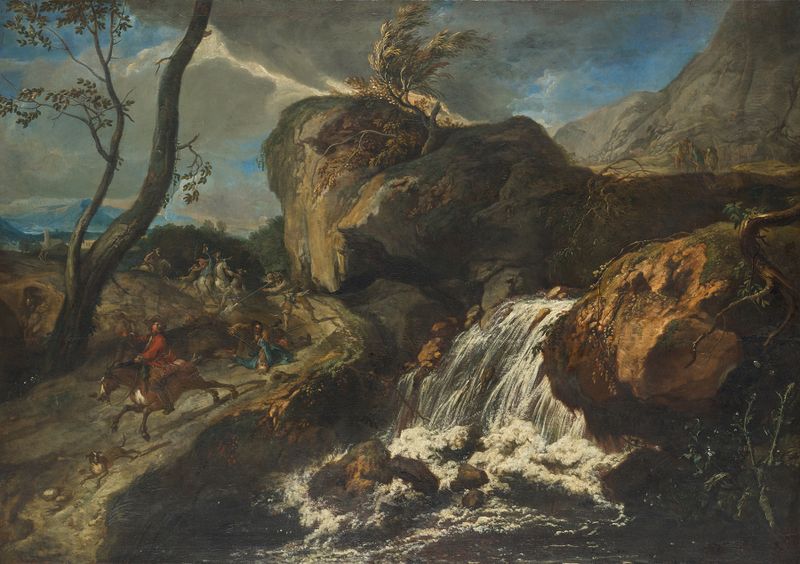
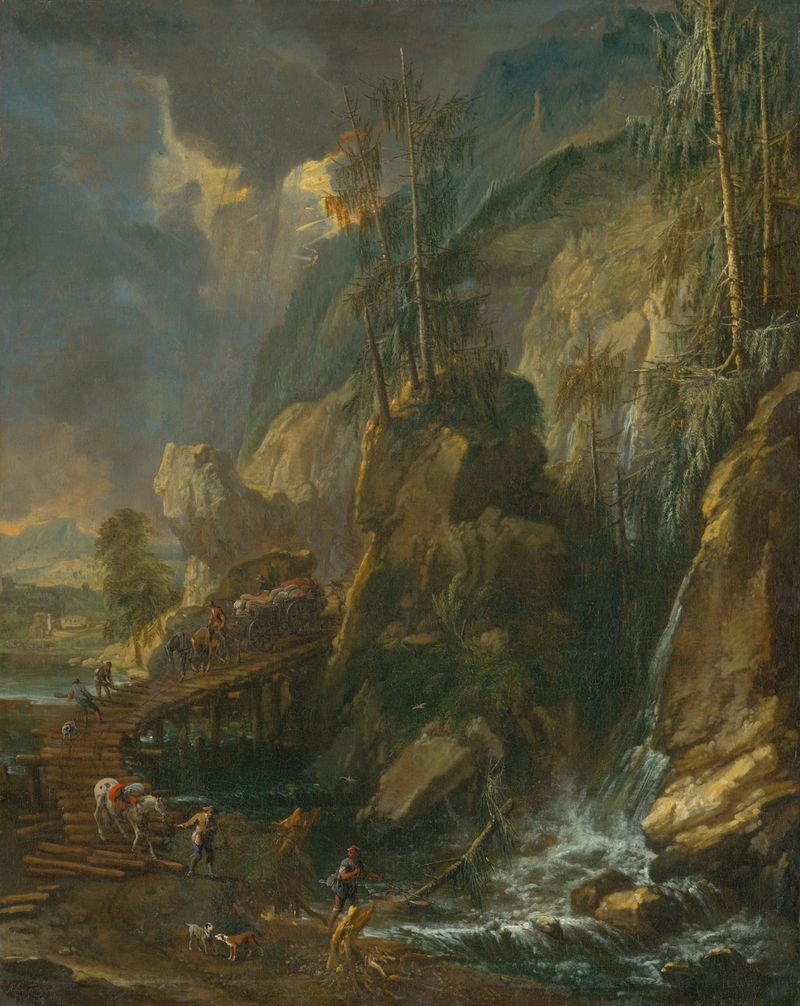
Could beauty survive in a century of chaos? In Gewitterlandschaft, the turbulent interplay of nature unfolds with raw power and profound truth, capturing a moment that transcends mere representation. Look to the left at the dramatic swirl of dark, ominous clouds that loom overhead, casting a shadow over the landscape. The artist’s brushstrokes create a dynamic tension, where the chaos of the storm contrasts sharply with the calm, verdant valley below. Notice how the muted greens and greys of the earth are illuminated by fleeting bursts of light, guiding your gaze toward the horizon where the tempestuous sky seems almost alive, vibrating with energy and movement. This painting embodies both conflict and harmony, evoking the fragility of beauty amidst nature’s fury.
The distant mountains, shrouded in mist, symbolize the unknown challenges ahead, while the vibrant patches of light suggest hope and resilience. The juxtaposition of fierce weather and tranquil scenery speaks to the duality of existence, reminding us that even in turmoil, truth can manifest as striking beauty. Anton Faistenberger painted Gewitterlandschaft in 1700, a period marked by immense social and political upheaval in Europe. Living in a time of wars and shifting powers, the artist was deeply influenced by the Baroque movement, which sought to convey both grandeur and emotional depth in art.
This work reflects not only his technical prowess but also a nuanced understanding of humanity’s relationship with nature, echoing the struggles faced during his lifetime.