Landschaft mit Fachwerkhaus und Bäuerin — History & Facts
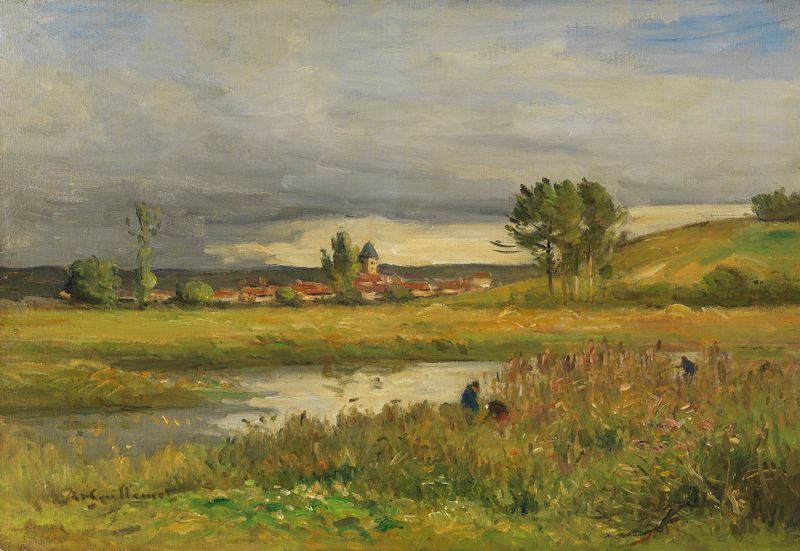
In Landschaft mit Fachwerkhaus und Bäuerin, the essence of hope entwines with the idyllic landscape, inviting the observer to seek solace amid life’s trials. Look to the left at the sturdy timber frame of the farmhouse, standing resolutely against the backdrop of a gently rolling landscape. The warm ochres and soft greens envelop the scene, while the sunlight bathes the farm in a golden glow, accentuating the textures of the building and the earthy soil below. Focus on the figure of the farmer's wife, poised in the foreground; her simple yet resilient stance indicates both labor and grace, a testament to her enduring spirit in the face of daily challenges. Delve deeper into the contrast between the bucolic serenity and the underlying struggles of rural life.
The juxtaposition of the woman’s labor and the tranquil countryside evokes a sense of quiet perseverance, hinting at the complexities of joy and sorrow inherent in her existence. The delicate interplay of light and shadow reveals a narrative of hope through resilience, as the vibrant colors simultaneously suggest the weight of life’s burdens and the beauty that emerges from them. Painted in 1890, Guillemet created this work during a time of transition in art, as realism began to intertwine with emerging impressionist techniques. Working in France, he was influenced by the changing perspectives on rural life and the burgeoning appreciation for the beauty in everyday scenes.
The painting reflects not only Guillemet’s own artistic evolution but also the growing recognition of the narrative depth found in humble subjects.